
Case Management Services in Las Vegas | Vegas Stronger
You’ve been discharged from detox with a list of follow-up appointments you can’t keep, because you don’t have an ID to get on Nevada Medicaid, no ride to the clinic, and nowhere stable to sleep tonight. Maybe you already did the hard part. You got through withdrawal, you sat in the intake chair, you told the truth about what you’ve been using, and then somebody handed you a stack of papers with phone numbers on it and wished you luck. By the next morning that stack is soaked, or lost, or it might as well be written in a language you can’t read, because the calls all lead to waitlists and offices that are closed and forms that ask for documents you don’t have.
That gap is where most people fall through, and not because they didn’t want recovery. It’s because nobody solved the boring, brutal problems standing between them and their next appointment. At Vegas Stronger, a case manager sits down with you on your first day and starts fixing those problems while you are still in the building. We’re the last house on the Block, and we don’t hand you a referral and call it help.
What a case manager actually solves that a therapist cannot
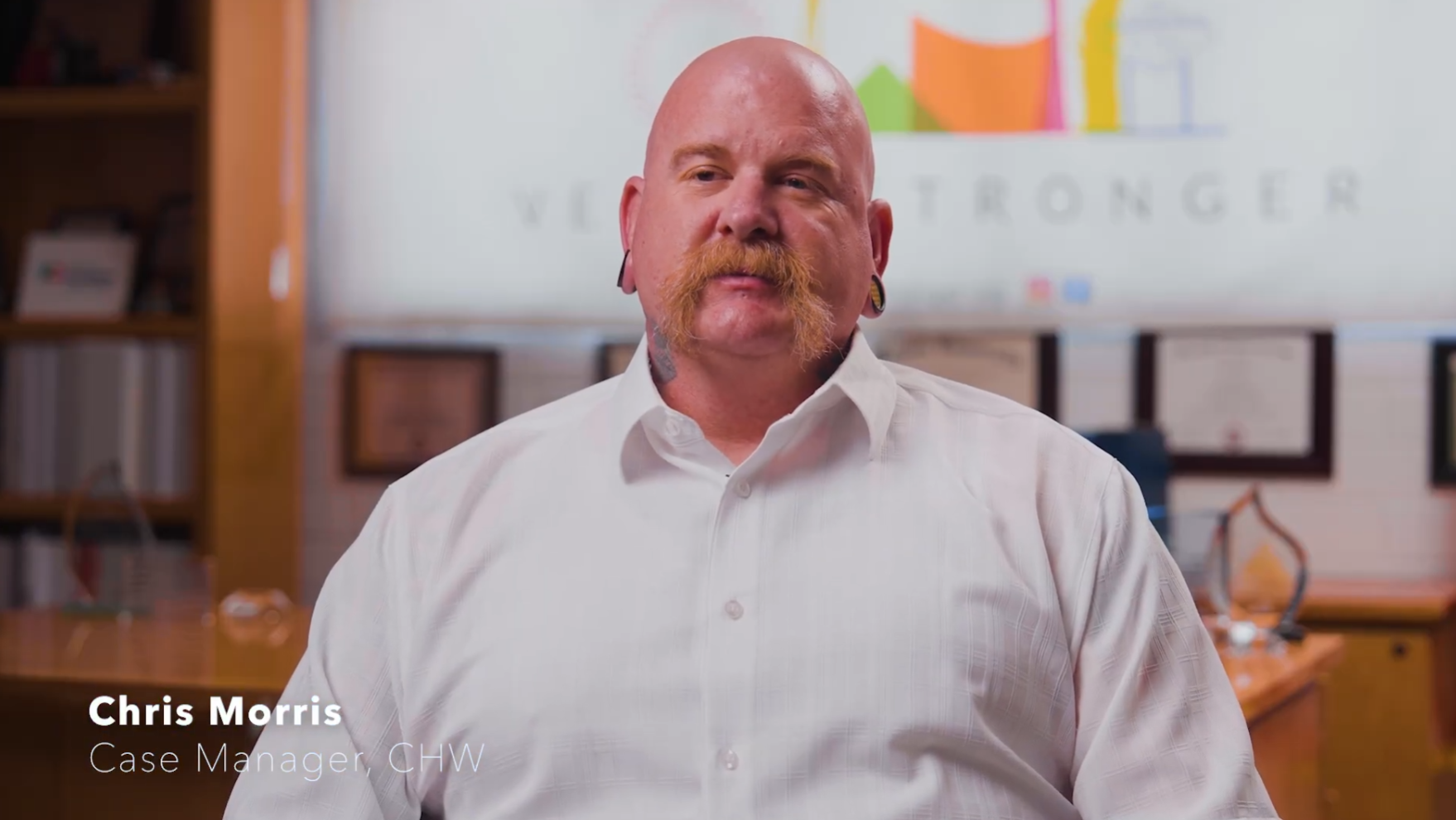
Case management is the coordination of everything that is not clinical but decides whether you can stay in treatment at all. Your counselor works on the substance use disorder itself: the thoughts, the trauma, the patterns underneath the using. Your case manager works on everything around it, which at Vegas Stronger means securing your identification, enrolling you in Nevada Medicaid, determining where you will sleep tonight, coordinating your other medical issues, sorting out what happens to your pet, and finding you a pair of shoes or clothes that fit. They are two different jobs, both necessary, and one is useless without the other.
The federal treatment guidelines make this plain. SAMHSA’s Treatment Improvement Protocol 27 describes comprehensive case management as the ongoing work of linking a person to the medical, psychological, social, and practical services they need to recover, and coordinating those services so they actually function as one plan instead of a dozen disconnected pieces. That is not therapy, and it is not a favor. It is a distinct professional service, and in a place like Las Vegas it often decides who makes it and who ends up back in the ER or the county jail.
Here is why it matters more here than almost anywhere. A lot of the people who walk through our doors are part of the underserved and unhoused population. They arrive without insurance, without stable housing, without a car, and sometimes without a birth certificate. You can offer the finest trauma-informed, evidence-based clinical program in the state, and it will not touch a person who cannot physically get to it, or who has to spend the whole day figuring out where to sleep. The logistical barriers in this city are so severe that solving them is not a nice add-on. It is the treatment plan working or failing, and it is the reason case management Las Vegas recovery looks different here than it does anywhere else.
What we do on day one, before you leave the building
Same-day access is the whole point, and it means no waiting list. You walk in, you consent to treat, we run the screens and the clinical assessment, you meet a psychiatric prescriber and a peer support specialist, and then you sit down with a case manager who starts working through the concrete obstacles that have derailed you before. This happens the same day, not after a callback, not after your file gets reviewed by a committee, and not after you prove you deserve it.
The first thing your case manager tackles is identity and benefits, because almost nothing else can move without them. If you don’t have an ID, we help you get one. We enroll you in Nevada Medicaid so you can actually use medical and psychiatric services instead of being turned away at the door. That single step unlocks the rest of the plan, which is exactly why so many other programs treat it as your problem to solve on your own time.
Then comes the question nobody else asks bluntly: where are you sleeping tonight. Your case manager answers it that day, not with a pamphlet but with an actual arrangement. On top of that we deal with the things that quietly sink people, the details other programs ignore. Do you have a pet nobody can watch. Do you need shoes or clean clothes to walk into a group without feeling exposed. Do you have a medical issue that needs coordinating. We handle those before you leave, and we schedule your ride to your next group or sleeping location so there is no gap between walking out today and coming back tomorrow. None of this is a phone number pressed into your hand. Your case manager completes it, or sets it in motion, while you are still here.
How we get you to detox and back without losing you
Sometimes outpatient care cannot start yet, because your body needs to come off substances safely first. When a medical detox or another acute stay is clinically indicated, your case manager does not send you off to figure it out. They arrange the admission, a Vegas Stronger driver transports you directly, and you sign a release of information so we can stay in contact the whole time you are gone.
That release is the part that keeps you from disappearing. The most common way people get lost in the system is the handoff. Someone finishes detox, walks out the door with no ride and no plan, and by the time anyone follows up they are already back in the cycle. We close that gap on purpose. Because we stayed connected during your stay, we know when you are discharging, and a driver is there to pick you up and bring you back into outpatient programming. You come out of detox into a plan, not into the parking lot.
Once you are in our care, your medical and psychiatric needs are coordinated in one place instead of scattered across a sprawling metro. Your case manager keeps medication assisted treatment on track, along with long-acting injectable medications, psychiatric prescribing, blood draws, and observed urinalysis. Early recovery is fragile, and a single missed dose or missed appointment can knock a person off course. When one team is holding all of it, you are not driving across town to four different providers and slipping through the cracks between them. This is what integrated Behavioral Health Care actually looks like on the ground, and it attaches at every level of care we offer: Outpatient, IOP, and PHP.
Why we can place you in housing when most programs turn you away
Here is the trap that keeps people cycling through jails and ERs and the Corridor: most treatment programs in Las Vegas will not admit you unless you already have stable housing, and you cannot get stable housing while you are still using and untreated. That circle is where a huge share of our neighbors are stuck. Las Vegas carries one of the highest rates of unsheltered homelessness in the country, and most people living on the street here also have an untreated substance use disorder or mental health condition. The two problems feed each other, which is exactly why we refuse to treat them separately.
Vegas Stronger is a designated Clark County Coordinated Entry site. In plain terms, that means our case managers work directly with the social services agencies that control housing placement instead of adding your name to a waitlist run by some outside office and hoping someone follows through. We are well integrated with all of those agencies, and our case managers work to secure group home and supportive housing placement as part of your recovery plan.
That designation is the difference between a referral and a result. A referral is a phone number. Placement is a bed. When a case manager can actually move you from the street into stable housing, the whole rest of the plan becomes possible, because you are no longer spending every waking hour surviving. This is the path to address our homelessness crisis, one person at a time, and it is core to how we practice case management Las Vegas recovery.
Why built-in rides are the difference between showing up and vanishing
The single most common reason people give for missing treatment in Southern Nevada is transportation. Las Vegas is a sprawling valley, and public transit does not reach most treatment sites in any reasonable amount of time. Tell someone with no car to make it to a group three times a week across the metro, and you have already lost most of them, no matter how motivated they were when they signed the intake papers.
So we do not leave that to you. Vegas Stronger employs drivers who pick you up and bring you to group therapy, individual counseling, psychiatric appointments, medical visits, higher levels of care like detox, and your sleeping location. Your case manager schedules the rides and builds them into your treatment plan, so getting to care is not one more impossible task on your list. It is handled.
Think about what that removes. No standing at a bus stop in July heat for a transfer that never comes. No choosing between gas money and food. No missing the psychiatric appointment that keeps your medication steady because you had no way to get there. Every ride we provide is a relapse that did not happen because a logistical wall stood in the way. Transportation sounds small next to therapy and medication, but in this city it is often the whole difference between staying in treatment and disappearing back into the cycle.
Two people in your corner: one for the systems, one who has been where you are
You do not work with just a case manager. You also work with a peer support specialist, and the two roles are built to complement each other rather than overlap. Your case manager handles the systems, meaning Nevada Medicaid, housing, medical coordination, transportation, and the paperwork. Your peer works from a separate peer support plan and brings something a case manager cannot, which is lived experience of getting to the other side of this.
That matters more than it sounds. A peer support specialist has sustained their own recovery and knows the Las Vegas landscape firsthand, the same shelters and stressors and temptations you are facing. When someone who has actually walked the Long Road of rebuilding their life tells you it is possible, it lands differently than it does from a stranger reading off a clipboard. Peers model what recovery looks like, they hold you accountable without judgment, and they carry hope into rooms where you might not have any of your own yet.
We don’t have a three strikes rule, and this is part of why. Recovery is not a straight line, and a person who stumbles is a work in progress, not a failure. The case manager builds the infrastructure that makes staying engaged possible, and the peer keeps you human inside it. One without the other leaves a hole. Together they are the recovery oriented system of care that carries people who have failed everywhere else, and it is the foundation of case management Las Vegas recovery as we deliver it. This is the antithesis of a 28-day rehab that discharges you and forgets your name.
Frequently asked questions
What does a case manager do on the first day of treatment?
On day one your Vegas Stronger case manager helps you secure an ID, enrolls you in Nevada Medicaid, determines where you will sleep that night, arranges transportation to your next group, and addresses immediate needs like clothing, shoes, or pet care. These tasks are completed or set in motion while you are still in the building, not handed to you as a list.
Does case management help with housing if I’m currently unsheltered?
Yes. Vegas Stronger is a designated Clark County Coordinated Entry site, so case managers work directly with social services agencies to place clients into group homes and supportive housing. We do the placement work rather than adding you to an outside waitlist.
Will I have to find my own rides to therapy and medical appointments?
No. Vegas Stronger employs drivers who pick you up and transport you to group sessions, counseling, psychiatric appointments, medical visits, and your sleeping location. Your case manager schedules the transportation and builds it into your treatment plan.
Can a case manager help me get on Medicaid if I don’t have an ID or birth certificate?
Yes. Case managers help you obtain identification and complete Nevada Medicaid enrollment on day one, so you can start using medical and psychiatric services right away instead of waiting weeks to get documented.
What happens if I need detox before starting outpatient treatment?
Your case manager arranges the detox admission, a Vegas Stronger driver transports you directly, and a signed release of information keeps us in contact throughout your stay. When you discharge, we pick you up and bring you back into outpatient care so you don’t lose your connection to treatment.
Is case management covered by insurance or Medicaid in Las Vegas?
Vegas Stronger accepts Nevada Medicaid, Blue Cross Blue Shield, Aetna, Cigna, and UnitedHealthcare. Case management is included as part of our outpatient substance use disorder treatment services, not billed as a separate add-on.
Call Vegas Stronger today for same-day intake and case management support that addresses housing, Medicaid, transportation, and medical care from the moment you walk in. Bring whatever ID you have if you have any, but come even if you have nothing, because getting you documented is the first thing we do, and there is no waiting list standing between you and that first conversation.