
Expertise provided by David Marlon, Owner and Kandi Orozco, Billing / Utilization Review
You typed “opioid treatment program” into a search bar, and you may not be sure whether you need a methadone clinic, a doctor who prescribes Suboxone, or something else. Nobody has explained the difference in plain words, so the confusion makes sense. At Vegas Stronger in downtown Las Vegas there is no dosing window and no waiting list. A person can walk in the same day and meet a therapist, a psychiatric prescriber, a peer support specialist, and a case manager before they leave. The first question the team answers is not which medication you get. It is what level of care is safest for you today.
Maybe you are searching for yourself after another bad night. More often, you are searching for someone you love: a son, a partner, a parent who keeps saying they will get help once things settle down. You may be tired, scared, and worn out from calling places that put you on hold or hand you an appointment three weeks out. This guide is meant to explain the options plainly.
Below you will find what this kind of program is, which medications exist, how it differs from other kinds of care, what the first week looks like, how insurance and Medicaid work, how privacy is protected, and where Vegas Stronger fits. Knowing which door you are walking through matters more than any sales pitch.
What Is an Opioid Treatment Program?
An opioid treatment program, often called an OTP, is a clinic certified by the federal government and licensed by the state to treat opioid use disorder with medication. It is generally the place where methadone is given out for addiction, and it can also offer buprenorphine and naltrexone along with counseling.
Certification comes through the federal Substance Abuse and Mental Health Services Administration, and the rules are laid out in SAMHSA’s federal guidelines for opioid treatment programs under 42 CFR Part 8. Those standards cover how medication is handed out and recorded, what counseling and medical services must be available, and how patient records are kept. Many OTPs ask patients to come in on a set schedule and take their dose in front of staff, especially early on. That daily visit is what most people picture when they hear “methadone clinic.” OTPs mostly serve adults 18 and older.
Here is the honest part. Vegas Stronger is an outpatient integrated behavioral health program at 916 N. Main Street, Las Vegas, NV, in the Corridor of Hope downtown. It offers partial hospitalization (PHP), intensive outpatient (IOP), and outpatient (OP) care. Medication assisted treatment is prescribed on site and built into that care. The medications include buprenorphine products and naltrexone products, which are described in more detail further down.
Why does this matter to you? Say your loved one is doing well on methadone and wants to stay on it. Now say you want buprenorphine or naltrexone alongside therapy, case management, peer support, rides, and help finding a place to sleep, all from one team. That is what Vegas Stronger built. Either way, one assessment can help sort out which path may make sense, and it can happen today.
What Is the Most Common Treatment for Opioid Addiction?
The most common treatment for opioid addiction is medication for opioid use disorder (MOUD) combined with counseling and support. Medication can reduce withdrawal and cravings, while counseling and practical help support rebuilding the life around it.
The National Institute on Drug Abuse (NIDA) describes three FDA-approved medications for opioid use disorder: methadone, buprenorphine, and naltrexone. NIDA also explains that these medications can lower the risk of overdose and help people stay in treatment. They are generally used as part of a fuller plan, not on their own. Results differ from person to person, and no medication guarantees recovery. Research supports placing medication at the center of the conversation for many people with opioid use disorder.
So why is medication alone often not enough? Opioid use rarely shows up by itself. It can come with lost jobs, broken trust, unpaid bills, a missing ID, nowhere safe to sleep, untreated depression or trauma, and sometimes a court date. A pill or an injection does not address any of that. If the rest of a person’s life remains in crisis, staying on medication can be very hard.
This is where Vegas Stronger’s integrated Behavioral Health Care model comes in. Each client sees a counselor, a case manager, a peer support specialist, and a psychiatric prescriber, and every one of them works from the same treatment plan for the same person. Vegas Stronger calls MAT “recovery medication.” It is a tool that supports abstinence from intoxicating substances, not a substitute for recovery work. Medications like buprenorphine and naltrexone may reduce withdrawal, cravings, and overdose risk, which can give people more room to show up for counseling, peer support, and the long, slow work of changing how they live.
If you have tried treatment before and it did not continue, you may be wondering how this could be different. That is a fair question. Vegas Stronger says most of the people it treats today are treatment savvy, and some notice how the setup differs from places they have been before.
What Medications Are Used in Opioid Treatment Programs?
Opioid treatment programs use three main medications: methadone, buprenorphine, and naltrexone, each in one or more forms. Vegas Stronger’s on-site prescribers use buprenorphine and naltrexone products. Vegas Stronger does not dispense methadone.
Each medication works differently in the brain, and the right choice depends on the person, the drug they have been using, and how recently they used it. These are the options you are most likely to hear about:
- Methadone. A long-acting opioid medication, usually taken by mouth once a day, that can ease withdrawal and cravings. For opioid use disorder, it is generally dispensed at a certified OTP. Vegas Stronger does not dispense it.
- Buprenorphine/naloxone (Suboxone). Buprenorphine is a partial opioid agonist that can reduce withdrawal and cravings with a lower risk of overdose than full opioids. Naloxone is added to discourage misuse. It is usually a film or tablet placed under the tongue, and Vegas Stronger’s prescribers use it.
- Buprenorphine monoproduct. Buprenorphine without naloxone, used when it is clinically indicated.
- Extended-release buprenorphine (Sublocade). A slow-release injection that lasts about 30 days. Vegas Stronger uses it after a person has stabilized.
- Oral naltrexone. A daily pill that blocks the effects of opioids. It is not an opioid, and it can only be started after complete detoxification.
- Extended-release naltrexone (Vivitrol). An injection form of naltrexone with the same rule: it starts only after complete detoxification.
The detox rule for naltrexone is not a technicality. Naltrexone pushes opioids off the brain’s receptors, so starting it too soon can throw a person into sudden, severe withdrawal. That is one reason the assessment comes before any prescription. The prescriber needs to know what you used, how much, and when.
Vegas Stronger leans on long-acting injectables where they fit. During intake, a medical assistant orders them where appropriate, because a monthly shot can be easier to keep up with than a daily dose. This may be especially relevant for someone who does not yet have a steady place to live or a safe spot to keep pills. Decisions about staying on MAT or tapering off are made one person at a time, based on clinical progress, the person’s goals, and the best available evidence, not on a fixed calendar.
How Is an OTP Different From General Addiction Treatment or a Doctor’s Office?
A certified OTP is built around giving out medication, especially methadone, under federal rules. A doctor’s office can prescribe buprenorphine but may offer little beyond that. A general rehab may offer counseling with or without medication. An integrated outpatient program like Vegas Stronger puts prescribers, therapists, case managers, and peer support specialists under one roof, working from one plan.
A certified OTP can be the right fit for many people, especially those who need methadone or who prefer a structured daily visit. The tradeoff is the schedule. Many OTPs run set dosing hours, and in a 24-hour town like Las Vegas, a casino or hotel shift can collide with them. Counseling is required, but how much you get beyond the basics varies from clinic to clinic.
Office-based prescribing means a doctor or other prescriber writes a buprenorphine prescription, and you pick it up at a pharmacy and take it at home. It is private and convenient. But if you also need help with housing, ID, Medicaid, depression, or trauma, you may be sent somewhere else. Then you are juggling separate offices, phone numbers, and waiting lists, and that is where some people lose connection with care.
A general rehab may center on counseling and may or may not offer medication. Some are 28-day programs that end before the hardest part of recovery begins. An integrated outpatient program like Vegas Stronger takes another route, with medication managed alongside your therapy and case management instead of in a separate system. Vegas Stronger says plainly: “We do not have a dosing window.” Prescribers are on site, and access is same-day with no waiting list.
So how do you choose? Ask a few questions of any place you call. Can I be assessed today? Who decides what level of care I need? Will the same team handle my medication and my counseling? What happens if I need detox first? What happens if I slip? If the answers are vague, or every answer starts with insurance, pay attention to that.
What Services Do Opioid Treatment Programs Provide?
Opioid treatment programs typically provide medication, medical and psychiatric assessment, counseling, drug testing, and case management. Integrated programs add help with the parts of life that can pull people back into use, like housing, rides, food, and steady support.
A certified OTP has to make counseling and medical services available, as described in SAMHSA’s federal OTP guidelines. How deep those services go differs a lot between programs. At Vegas Stronger, the care wrapped around MAT includes:
- Medication assisted treatment with a psychiatric assessment, a psych eval, and ongoing medication management by on-site prescribers.
- Trauma-informed counseling in PHP and IOP, using CBT, DBT, Seeking Safety, and somatic approaches. EMDR and exposure therapies come later, once a person is stable and has a strong working relationship with their therapist.
- Observed chain-of-custody urinalysis and blood draws, done by medical assistants at intake and during care.
- Case management that handles identification, Medicaid enrollment, where you will sleep, issues with pets, and shoes or clothes if you need them.
- Peer support, with a peer support specialist assigned to every client.
- Dual diagnosis care for people with co-occurring mental health conditions, so depression, anxiety, PTSD, or other conditions are treated alongside the substance use disorder.
- Meals and transportation during IOP, so hunger and a missing ride are less likely to keep you away.
- Wellness programming: a personal trainer who sees each IOP client three times a week to build a fitness habit, therapeutic recovery yoga, a theater program built on role-play, and an entrepreneur class that teaches people to manage spending and money.
The higher-intensity starting point for many people is the Vegas Stronger Partial Hospitalization Program (PHP), which offers intensive counseling five or six days a week. For more on the step-down level, the Vegas Stronger guide “IOP Program in Las Vegas: How Intensive Outpatient Treatment Works at Vegas Stronger” covers group structure in detail.
Why add a trainer, a yoga instructor, and a theater class? Recovery is not only about stopping a drug. It is about filling the hours that used to belong to it with something that gives a person reasons to stay engaged. These pieces connect back to the same treatment plan because, in Vegas Stronger’s words, it is “same team, same client, same treatment goals.”
Who Works at an Opioid Treatment Program?
A typical OTP team includes prescribers, medical staff, counselors, and case managers. At Vegas Stronger that team also includes peer support specialists, community health workers, a transportation team, and fitness and yoga staff, all working from the same plan.
Vegas Stronger describes its people this way:
- Five psychiatric prescribers on site, who handle medication assisted treatment and psychiatric medications for each client individually.
- Therapists and clinicians, hand-picked for their connection to the mission. A separate team handles prior authorization, billing, and admissions so clinicians can focus on clinical work.
- A clinical director and a clinical manager, who each bring about 20 years of experience working in Las Vegas.
- Medical assistants, who order long-acting injectables, arrange medication delivery, and do blood draws and observed urinalysis.
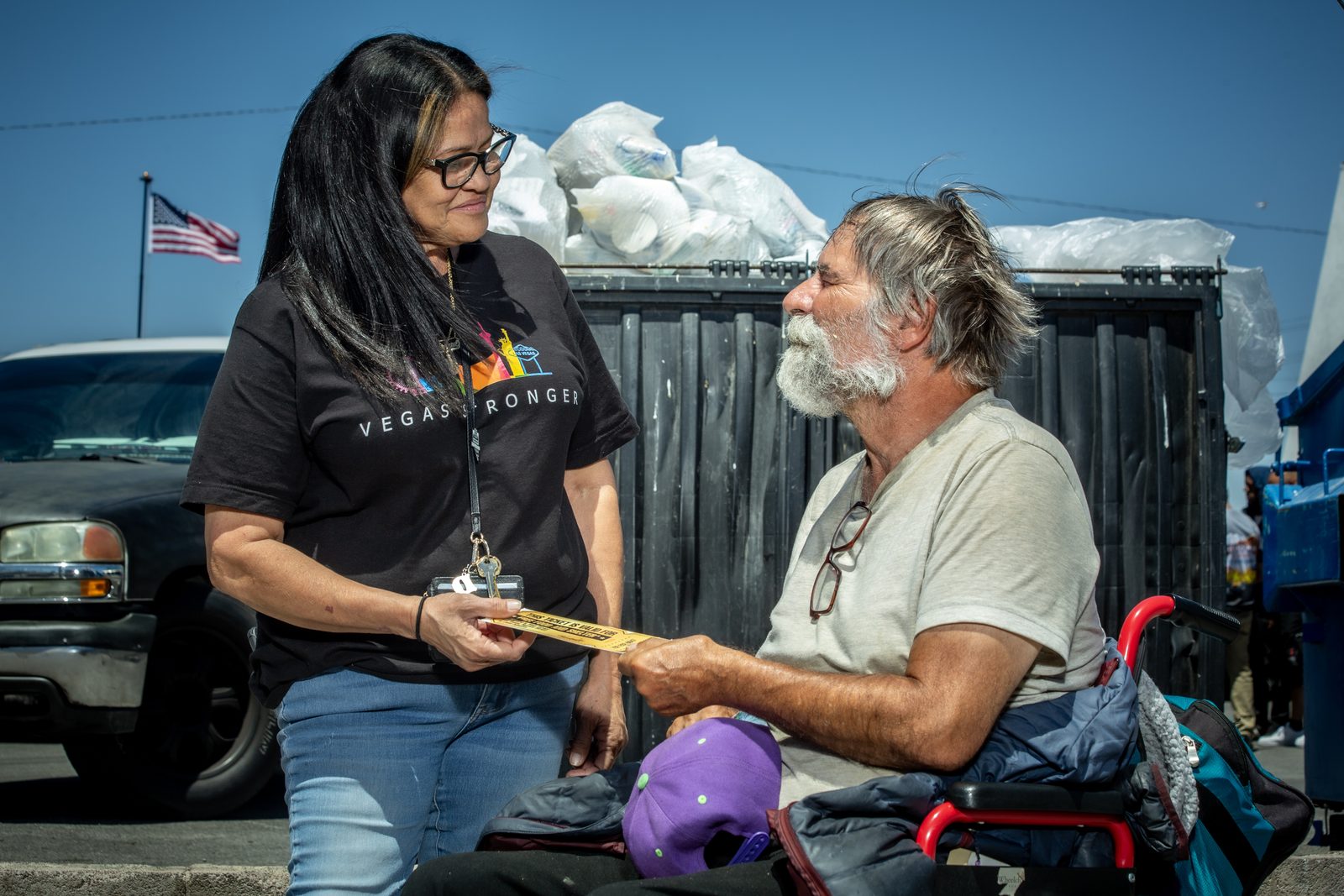
- Peer support specialists, who work the lobby seven days a week. They help with immediate needs like finding the restroom or getting food or clothes, often share their own story, and explain how the clinic works. Their training covers recovery, the disease, different substances, and signs and symptoms.
- Case managers, who handle ID, Medicaid, housing connections, and other medical needs.
- Community health workers, who support clinicians and clients in IOP.
- A transportation team, each of them in recovery, who drive clients to and from treatment.
- A personal trainer and a recovery yoga instructor, who help clients feel more grounded and more at home in their bodies.
- CEO David Marlon, who has worked in the Corridor of Hope in downtown Las Vegas for 10 years and is in long-term recovery himself.
Some people assume a peer is just someone who tells war stories. That is not the job. At Vegas Stronger, peers sit on the same team as the prescribers, case managers, and counselors because they can connect with clients in ways a clinician sometimes cannot, and that connection can bring out information the rest of the team needs to hear. A peer might learn in the lobby that someone has not eaten in two days or is scared of a person they owe money to. That gets shared with the team so the plan reflects real life.
Clients often mention the drivers. When the person who picks you up every morning has been where you are, the ride can become part of the treatment. It is a small thing that can add up, day after day.
What Does the First Week of an Opioid Treatment Program Look Like?
At Vegas Stronger, the first day is a same-day intake that walks you through the whole team in one visit. By the end of it, you know where you will sleep tonight, which group you attend tomorrow, and who is picking you up.
You do not need to have your life sorted out before you come in. If you have an ID, a Medicaid or insurance card, or the medications you currently take, bring them, because the assessment asks about current medications. If you have none of that, come anyway. Vegas Stronger does not require anyone to have housing lined up first, and case managers connect people with community partners for safe temporary housing and other basic needs.
Here is the order things happen on day one at Vegas Stronger:
- Front desk. Staff help you sign a consent to treat and fill out a few screening forms.
- Something to eat or drink. Someone asks if you are hungry or thirsty and gets you food or a drink.
- Therapist assessment. A therapist does a clinical assessment, and your treatment plan starts taking shape.
- Psychiatric prescriber assessment. A prescriber does an assessment and psych eval and decides whether and how to start medication assisted treatment.
- Medical assistant. Long-acting injectables are ordered where appropriate, medications are set up for delivery, and blood draws and an observed chain-of-custody urinalysis are done.
- Peer support specialist. You meet your peer and build a separate peer plan together.
- Case management. Your case manager works on identification, Medicaid enrollment, where you will sleep, other medical issues, pets, and shoes or clothes if you need them.
- Acute care, if needed. If you need detox or another acute stay first, case managers arrange it, drivers take you there, you are asked to sign a release of information, and the team picks you up afterward.
- Tomorrow’s plan. Staff tell you which group to attend tomorrow and what time it starts.
- A ride. The transportation team takes you to a place to sleep with restrooms and schedules your pickup for the next day.
After day one, the rhythm depends on your level of care. In PHP, you get intensive counseling five or six days a week, with individual sessions supported by case management, peer support, and psychiatric care. Once you are stable and the primary substance use disorder has been addressed, you step down to IOP. IOP groups meet three days a week for three hours per group, and Vegas Stronger runs them seven days a week in morning, afternoon, and evening tracks.
If you are a family member, your biggest fear may be that your loved one says no, or says yes and walks out on day three. That happens, and it is not the end of the story. Vegas Stronger does not close the door on someone who leaves early. The rides, the meals, and the same faces in the lobby every morning are there to make showing up easier on the days motivation runs low.
Is Outpatient MAT Safe for Withdrawal, and What If Detox Is Needed?
For some people with uncomplicated opioid withdrawal, MAT started the same day on an outpatient basis may be an option, but only after an assessment confirms it. Vegas Stronger’s rule is that the right level of care comes before the treatment method, and when it is a close call, the team refers to detox.
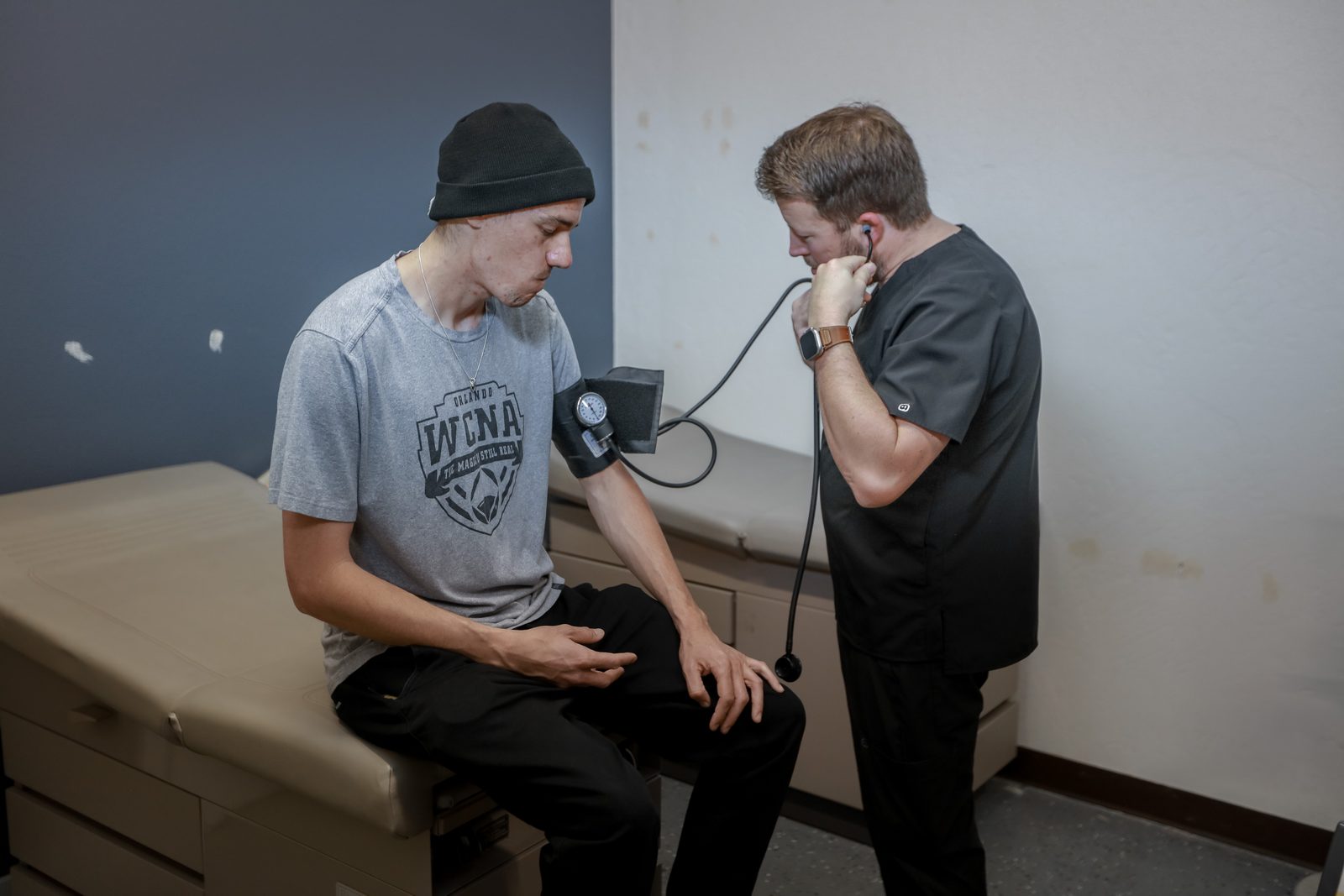
During the same-day assessment, the therapist and the psychiatric prescriber look at your full substance use history and vital signs. For opioids, they use the Clinical Opiate Withdrawal Scale (COWS). They also ask how long it has been since you last used and what you used, whether fentanyl, heroin, oxycodone, methadone, or buprenorphine. They ask whether you have ever had precipitated withdrawal, whether you have overdosed before, and whether you are also using alcohol or sedatives. That last question matters a lot, because benzodiazepines are still widely prescribed and misused, and withdrawing from them can be dangerous.
When detox is the safer choice, the team does more than hand you a phone number. They check insurance and availability, call and set up the admission, and drive you to one of the six detox programs in Las Vegas. You are asked to sign a release of information so they can stay in contact while you are there. When the stay ends, they pick you up and start you in PHP, IOP, or OP. Because getting into detox can be a hassle, Vegas Stronger tells people it is often better to come in first and get assessed. For what those early days look like, read Detox in Las Vegas: The First 72 Hours and What Comes Next.
Sometimes a client in PHP, IOP, or OP ends up needing emergency medical or psychiatric care. In that case, Vegas Stronger coordinates with the hospital or emergency department, as allowed by the client’s authorization and confidentiality rules. While someone is hospitalized, the hospital is the right level of care. When they are ready to come back, the team reassesses their needs instead of automatically putting them back where they were. The aim is that nobody gets lost between the hospital and community care.
How Long Does Opioid Treatment Last?
Opioid treatment does not have a fixed end date. Per Vegas Stronger, clients have stayed about six months on average and some have stayed longer than a year. Decisions about continuing or tapering medication are made individually.
Vegas Stronger describes itself as “almost the antithesis of a 28-day rehab.” The program does not ask people to stay a year for its own sake. People may stay because they have mental, behavioral, physical, and social rebuilding to do, and that kind of rebuilding often goes better with a full support system around it. Think about what has to change: where you sleep, who you spend time with, how you handle stress, how you earn money, how you talk to your family. None of that fits into four weeks.
Order matters too. When fentanyl is involved, the first job is getting grounded: stopping the fentanyl, stabilizing with medication if it fits, and building social supports. Many people want to dig into old trauma right away, and Vegas Stronger usually encourages one step at a time. Deeper trauma work, like EMDR or exposure therapies, starts only once there is a strong working relationship with a therapist and a track record in treatment. That usually happens in IOP, and sometimes in OP.
The team sees itself as “the last house on the Block” for the people it serves, and it recognizes that a person may need two, three, or ten treatment episodes while working toward becoming self-supporting, rebuilding self-esteem, and working a program of recovery. Coming back after a recurrence is treated as part of the process, not as failure.
One client, whose identifying details are left out here to protect his privacy, came in talking a big game and sure he could keep some recreational drug use going. He connected right away with his psychiatrist, case manager, peer, trainer, yoga instructor, and counselor. He had several recurrences and spent time locked up between treatment episodes, and each time he returned he looked more worn down. He kept coming back. His experience is one person’s story and not a typical result.
What Insurance Covers and How to Start
Vegas Stronger accepts Medicaid, Aetna, Blue Cross Blue Shield, Cigna, and UnitedHealthcare. Its admissions process focuses on finding the right level of care, not on insurance. To start, call any time, day or night, or come in for a same-day assessment.
According to Vegas Stronger, Nevada rolled out managed Medicaid statewide in 2026, so people on Medicaid are now assigned to one of five managed care organizations (MCOs), and Vegas Stronger is contracted with all five as an in-plan provider. In practice, that means care does not change for someone arriving from another county in Nevada: the same intake, the same team, the same services. If you are not enrolled in Medicaid yet but may qualify, enrollment is one of the first things a case manager works on with you.
If you have a marketplace plan, HealthCare.gov explains that marketplace plans must cover mental health and substance use disorder services. Your specific costs depend on your plan, so it is worth having the details checked. At Vegas Stronger, an administrative team handles that check in the background. Vegas Stronger puts it bluntly: they are not hung up on verification of benefits, they are hung up on helping people. For a deeper look at Medicaid in particular, read the Vegas Stronger guide “Does Medicaid Cover Addiction Treatment in Las Vegas? A Complete Answer.”
You may be worried that a treatment center will care more about your card than about your loved one, or that you are about to get pulled into bills you cannot pay. That fear is reasonable, and plenty of families have felt like a revenue line instead of a person. One way to test any program is to watch what it asks first. At Vegas Stronger, the first questions are about safety and level of care, and the team will sometimes drive a person from the lobby straight to detox or another facility if that is what they need.
Starting is simple. Vegas Stronger takes calls around the clock and can help arrange an assessment. If you would rather talk to someone outside any one program first, the free, confidential SAMHSA National Helpline offers treatment referrals 24 hours a day.
How Does Treatment Fit With Work, Family, and Travel in Las Vegas?
Treatment at Vegas Stronger is built around the fact that Las Vegas is a 24-hour town. IOP runs seven days a week in three tracks, and on-site prescribers handle medication instead of a fixed dosing window, so some people may be able to keep working while they get care.
Vegas Stronger says many of the people it serves work overnight, swing, weekend, casino, hospitality, and other nontraditional shifts. When the team builds a treatment plan, it looks at your job, your family responsibilities, your transportation, and your housing, because those are often the things that influence whether someone keeps showing up. “Our goal is not to make someone choose between maintaining employment and receiving treatment,” the team says. You will not be asked to change careers, though if you choose to, Vegas Stronger will help you through it.
Structure still matters. Medication administration and PHP, IOP, and OP services have clinical and scheduling requirements that have to be followed, and the team works with each person to find the right schedule within them. A dealer who gets off at 6 a.m. might fit a morning IOP group before sleeping. A server with a toddler might do better in an afternoon track while a relative watches the baby. These are the kinds of tradeoffs to talk through with your team on day one.
Life does not stop for treatment. Family emergencies, work trips, court requirements, medical needs, and temporary moves within Nevada all come up, and Vegas Stronger asks clients to tell their treatment team as early as possible. PHP and IOP have attendance requirements, so long absences can affect both your treatment plan and your insurance authorization. Instead of simply saying no, the team looks at each situation. It might coordinate services, adjust the plan when that is clinically appropriate, connect you with another resource, or decide whether discharge and reassessment make sense.
The location helps too. Vegas Stronger sits in the Corridor of Hope downtown, near many of the services people without housing already rely on. Its transportation team and housing partners help create a setup that, in the team’s words, looks and feels a lot like residential treatment while staying outpatient.
How Is Your Privacy Protected Under 42 CFR Part 2 and Nevada Law?
Your participation in treatment at Vegas Stronger is not shared with family, employers, or friends just because they ask. Records are protected under federal and Nevada confidentiality rules, and authorization is obtained when required before information goes anywhere.
Substance use treatment records get extra protection under federal law. Vegas Stronger protects client information under HIPAA and the additional federal protections for substance use disorder records known as 42 CFR Part 2, along with Nevada’s confidentiality requirements. In plain words, the fact that someone is a client at all is protected information, and so are their diagnosis, medications, and drug test results.
Sometimes sharing can support a person’s care, such as talking with another provider, a hospital, a probation or parole contact, a family member, or a community organization. In those cases, Vegas Stronger gets the right authorization when required before sharing anything protected. As Vegas Stronger puts it, its integrated approach depends on communication and coordination, but that coordination has to respect the client’s privacy, dignity, and legal rights.
If you are a parent or spouse, this can feel awful. You call, you are desperate to know whether your loved one is safe, and the person on the phone will not even confirm they are a client. That is not coldness. It is the law doing its job, and it is also part of what can make it feel safer for your loved one to walk in, since many people never seek help because they fear their boss or their family will find out. One way to stay in the loop is to ask your loved one to sign a release so the team can talk with you.
How Can Family Members Help Without Enabling?
Family members can often help by learning how addiction and recovery work, setting healthy boundaries, and being part of treatment when the client agrees. At Vegas Stronger, family can be included in the treatment and recovery process when it is clinically appropriate and the client has authorized it.
Vegas Stronger knows substance use disorder rarely affects only the person getting treatment. Families are often carrying fear, frustration, broken trust, uncertainty, and years of trying to help someone they love. You may have paid the rent one more time, covered for a missed shift, or stayed up waiting for a car in the driveway. None of that makes you a bad parent or partner. It makes you a tired one.
When family involvement fits the plan and the client says yes, Vegas Stronger’s work with families can help you understand addiction and recovery and identify healthy boundaries. It can teach you to recognize relapse warning signs and work on the way you and your loved one talk to each other. It can also help you think through how to support recovery without accidentally enabling continued substance use. That last part is often the hardest, because the line between helping and enabling is not always obvious from inside a crisis.
The reason behind all of this is simple. Vegas Stronger’s goal is to strengthen the client’s recovery environment whenever possible, because what happens outside of treatment can matter just as much as what happens inside it. A person can do meaningful work in group for three hours and then walk back into a home full of old fights and old triggers. When the family knows the plan, that gap may begin to narrow.
How Does Vegas Stronger Address Opioid Challenges in Las Vegas?
Vegas Stronger meets the local opioid problem with same-day access, long stays, and integrated care for people who often have nowhere else to go. Its own team reports that opioid overdoses in Nevada have not dropped as much as they have nationally.
What follows is Vegas Stronger’s observation from its own clients, not an official statistic. Opioid overdoses are down significantly nationwide, but in Nevada they are down only slightly. The team is equally alarmed that methamphetamine overdoses are rising to levels similar to opioids, and that many people who use drugs see meth as less risky than fentanyl. Benzodiazepines also remain widely prescribed, used, and misused, and they are more dangerous to withdraw from. For people with opioid use disorder, these trends mean mixing substances is common, and safe care has to account for all of them, not just the opioid. For the latest published figures, see the Vegas Stronger article “Nevada Addiction and Overdose Statistics 2026: What the Data Shows for Las Vegas.”
Vegas Stronger reports treating about 2,000 people last year. Many came from the underserved and unhoused population downtown, and many had serious mental illness, a substance use disorder, or both. The team’s view is that integrated behavioral health care with same-day access, long treatment stays, and a recovery-oriented system of care may be able to support many of those people.
Many people assume the answer to homelessness and addiction downtown is housing alone. Vegas Stronger’s view is that integrated behavioral health care is “the path to address our homelessness crisis.” Housing matters, and case managers work hard to find it. But a room without treatment, medication, and a team may not be enough for some people.
What Is the Newest Treatment for Opioid Addiction?
Among the newest treatments in common use for opioid addiction are long-acting injectable medications, such as extended-release buprenorphine (Sublocade) and extended-release naltrexone (Vivitrol). Vegas Stronger uses both.
Injectables change daily routines more than they change chemistry. The medicine inside is the same buprenorphine or naltrexone. What is different is that you do not have to remember a dose every day, carry pills, or worry about losing them. Recent clinical guidance, including a 2024 update to a national clinical practice guideline on managing opioid use disorder, discusses extended-release buprenorphine as part of today’s treatment options. For someone without steady housing, or for anyone who has struggled with daily doses before, a monthly injection may reduce a barrier.
You may have heard about psychedelics as a new answer for addiction. Vegas Stronger’s position is that people with chemical dependency should get psychosocial care built on evidence-based treatments that have been double-blind tested and peer reviewed, and psychedelic treatments have not reached that bar yet. Vegas Stronger encourages the research, and when the evidence is there, the team expects to use new medications.
That position may sound cautious, and it is meant to be. When someone you love is in danger, a reasonable choice is often the one with the most evidence behind it, offered by people who will still be there if the first attempt does not continue.
What Is an Opioid Used to Treat?
Opioids are prescribed mainly to treat pain, such as pain after surgery, after an injury, or from certain serious illnesses. They can relieve pain, but they can also lead to physical dependence and, for some people, opioid use disorder.
Opioid use disorder is a medical condition, not a character flaw. A person may have started with a prescription after a back injury, or with pills from a friend, and slowly found they could not stop even when they wanted to. Today, much of the opioid supply on the street contains fentanyl, which is far stronger than many people realize and makes overdose much more likely. NIDA treats opioid use disorder as a treatable condition, with medication as a core part of care.
It helps to know that medication for opioid use disorder is not the same as taking opioid pain pills. Buprenorphine and methadone are given in controlled doses, under a prescriber’s care, to reduce withdrawal and cravings without the highs and crashes that drive the cycle. Naltrexone is not an opioid at all. Taking these medications as prescribed is treatment, not trading one addiction for another.
If any of this sounds like you or someone you love, the first-week steps above show what happens when you walk in. You do not have to figure out the right medication before you come. That is the team’s job.
Questions People Ask Before They Make the First Call
Most people ask the same handful of questions before they reach out to Vegas Stronger. Here are short, honest answers.
Does Vegas Stronger dispense methadone?
No. Methadone for opioid use disorder is generally dispensed at a certified OTP. Vegas Stronger prescribes buprenorphine and naltrexone products and can help you figure out which kind of program fits.
Can I start medication for opioid use disorder the same day in Las Vegas?
Vegas Stronger offers same-day access with no waiting list. The team first decides the safest level of care for you today, including whether you need detox before outpatient MAT can begin.
Do I need housing or insurance sorted before I come in?
No. Case managers help with ID, Medicaid enrollment, and where you will sleep, and an administrative team handles insurance checks behind the scenes.
Will my family or employer be told I am in treatment?
Not just because they ask. Records are protected under federal confidentiality rules and Nevada law, and authorization is obtained when required before anything is shared.
How long does opioid treatment usually last?
Per Vegas Stronger, clients have stayed about six months on average and some have stayed longer than a year. Decisions about continuing or tapering medication are made individually.
What insurance does Vegas Stronger accept for MAT?
Medicaid, Aetna, Blue Cross Blue Shield, Cigna, and UnitedHealthcare. Vegas Stronger says it is contracted as an in-plan provider with all five Nevada managed Medicaid MCOs.
If you or someone you love is looking at an opioid treatment program in Las Vegas, call Vegas Stronger any time, day or night, to start a same-day assessment at the downtown Las Vegas location, with no waiting list. Here is one thing to do before you call: write down what was used, roughly how much, and when it was last used, and note whether alcohol or benzodiazepines were part of it. Those few facts are what the team needs to help decide the safest place to start, and having them ready can help shape the first conversation into a plan for today.
Ready to Talk About Opioid Treatment in Las Vegas?
If you have been wondering whether medication-assisted treatment is the right fit, or whether it is too late to ask, you are not alone in that hesitation. Reaching out does not commit you to anything, and it can simply be a conversation about where you are and what support might look like. The team at Vegas Stronger is here to listen when you are ready, so call the office and take that first step.
Individual experiences and results vary; this article is general information, not medical advice. Please do not stop opioids, benzodiazepines, or alcohol without talking to a medical provider, and if someone is unresponsive, breathing slowly, or turning blue, call 911 right away.