People who look up the 3-3-3 rule for meth are usually trying to put a shape on early recovery, and the honest starting point is that it’s an informal way of talking about the first three days, three weeks, and three months, not a clinical standard. What we see at Vegas Stronger is that the first three days decide the most, which is why we put same-day access, an assessment, a prescriber visit, a peer support specialist, and a ride to a place to sleep into that window. The rule can help you picture the road ahead, but it can’t walk that road for the person stopping meth.
This page explains what the rule means and where it falls short for meth. It covers how meth use is diagnosed, how inpatient and outpatient care compare, and what each stretch of recovery can look like inside an outpatient program in Las Vegas where one team treats substance use and mental health together. Vegas Stronger calls that integrated behavioral health care.
What is the 3-3-3 rule for addiction, and where does it come from?
The 3-3-3 rule for addiction is informal shorthand for three stretches of early recovery: the first 3 days, the first 3 weeks, and the first 3 months after someone stops using. Families and recovery groups pass it around because it is easy to remember. It is not a standard from any clinical body or federal agency, and no two people move through it on the same clock.
Think of it like learning to walk again after a long stay in a hospital bed. The first few days are about not falling. A person in early recovery needs to get through the crash safely, eat, sleep, and stay away from the drug. The next few weeks are about finding their feet: showing up to the same place at the same time, learning what sets off cravings, and letting other people help. The next few months are about walking somewhere. That can mean rebuilding sleep, mood, money, housing, and relationships so that not using can become a way of living, not a white-knuckle countdown.
The trouble is that the rule makes recovery sound like a timer, and meth does not keep to a schedule. For a person with a stimulant use disorder, the hardest days do not always land where a slogan says they will. Some families assume that once day 90 passes, the danger is behind them. That is not always the case. Three months is often when a person feels well enough to believe they can handle “just once,” and it is a point where the real rebuilding may only be getting started.
You may also run into other “3” rules while searching, and they are different things. One is a grounding exercise for anxiety: name three things you see, three sounds you hear, and move three parts of your body. It is a real coping tool, and grounding skills are part of the trauma-informed groups at Vegas Stronger, but it is not a recovery timeline. Another is the so-called 3-day methadone rule, a federal rule that lets certain medical providers give methadone for up to three days to ease opioid withdrawal while longer-term care is arranged. Methadone is an opioid medication. It is not a meth treatment, and that rule has nothing to do with stopping meth.
How is meth use diagnosed, and how is it assessed?
The clinical name for a meth problem is stimulant use disorder, specifically the amphetamine-type form, and clinicians diagnose it using the criteria in the DSM-5, the manual used across mental health and addiction care. Those criteria look at patterns over the past year rather than any single bad night. A clinician asks whether the person uses more than they meant to, has tried and failed to cut back, spends a lot of time getting or recovering from meth, has strong cravings, falls behind at work, school, or home, keeps using despite problems with relationships or health, has given up activities they used to care about, uses in risky situations, needs more to get the same effect, or feels withdrawal such as exhaustion, heavy sleep, hunger, and low mood when they stop. Two or three of these point to a mild disorder, four or five to a moderate one, and six or more to a severe one. The severity helps shape how intensive care should be, but it is never a verdict on the person.
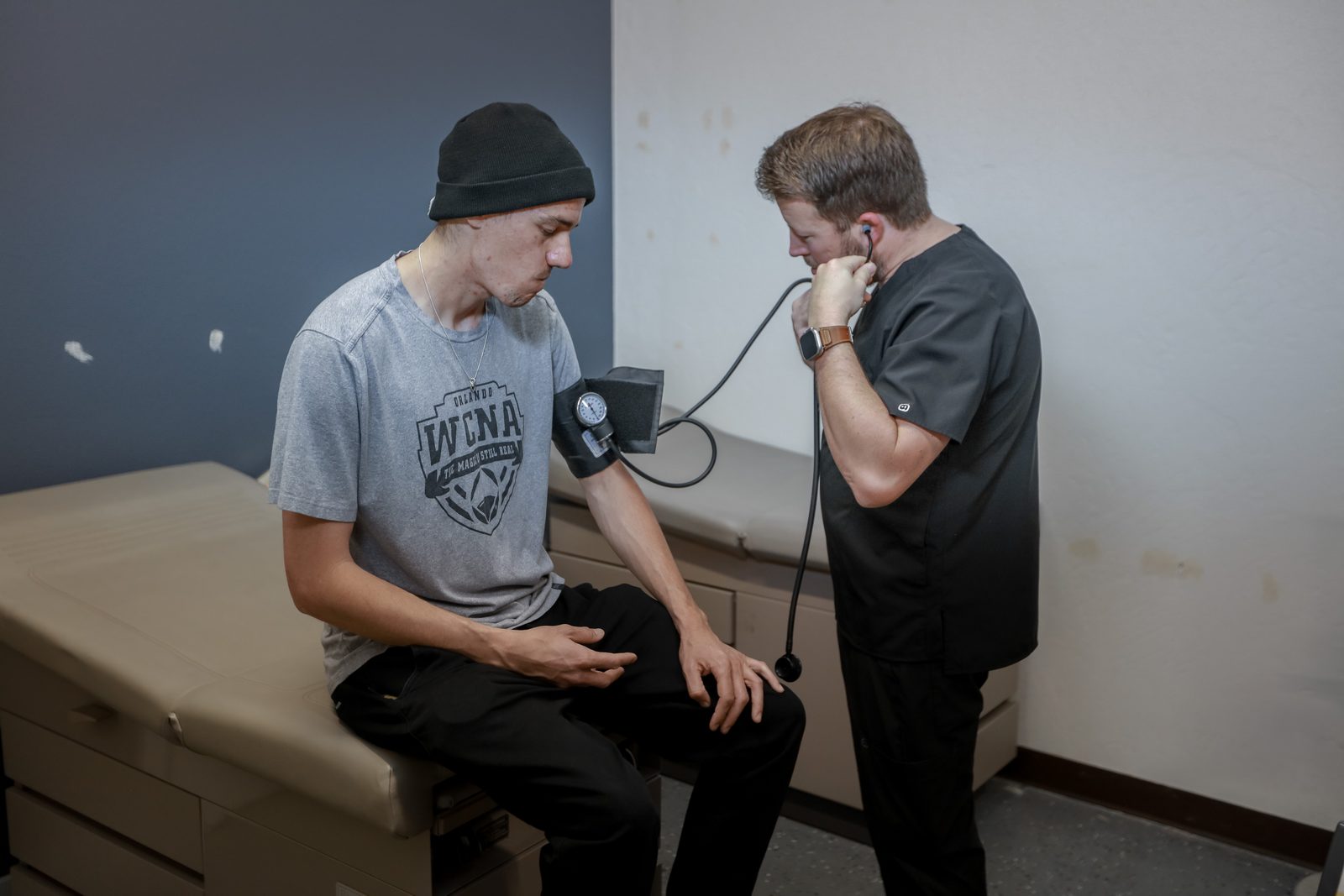
At Vegas Stronger the assessment happens on the first visit, not weeks later. A therapist does a clinical assessment that covers substance use history, the time and amount of last use, past withdrawals, and medical and psychiatric history. A psychiatric prescriber then does a separate psych eval, because meth use often occurs alongside depression, anxiety, trauma, or psychosis, and a co-occurring condition left untreated can make recovery harder. Vital signs, a suicide and violence risk check, a mental status exam, blood work, and an observed urinalysis round out the picture. The team also asks about other substances, since alcohol, benzodiazepines, or opioids used alongside meth can change where care should safely begin.
Inpatient vs. outpatient for meth: which fits which person?
Many people stopping meth can start safely in an outpatient setting, because meth withdrawal on its own is rarely medically dangerous the way alcohol or benzodiazepine withdrawal can be. Inpatient or residential care may make more sense when someone is medically or psychiatrically unstable, or has no safe place to be. Vegas Stronger is an outpatient program and does not provide inpatient, residential, or detox care, but it helps people get to those settings when they need them first.
| Factor | Inpatient / residential care (provided elsewhere) | Outpatient care at Vegas Stronger (PHP, IOP, outpatient) |
|---|---|---|
| Who it tends to fit | People with severe psychiatric symptoms, dangerous withdrawal from alcohol, benzodiazepines, or opioids used alongside meth, or serious medical illness | People who are medically stable enough to go home or to a shelter or sober living bed at night |
| Where the person sleeps | On site at the facility | At home, in a shelter, or with a housing partner, with rides from the transportation team |
| How much treatment | Around the clock, usually for a short set stay | PHP: 5 or 6 days a week; IOP: 3 days a week, 3 hours per group, then outpatient |
| How long it usually lasts | Often weeks | The average client stays about 6 months, and some stay longer than a year |
| What Vegas Stronger does | Assesses, checks insurance and availability, arranges the admission, drives the person there, and picks them up afterward | Provides the care directly, with therapy, psychiatric prescribers, case management, peer support, meals, and transportation |
Many Vegas Stronger clients combine outpatient treatment with housing partners and daily transportation. That combination can feel similar to residential care, even though it is outpatient treatment.
What do the first 3 days look like for meth, and what happens at Vegas Stronger?
The first 3 days after stopping meth are usually about safety and connection. Many people feel crushing tiredness, sleep for long stretches, feel very hungry, and feel low or irritable. At Vegas Stronger, day one starts with same-day access and no waiting list. By the end of that first visit, your loved one is told where they can sleep tonight and which group to attend tomorrow.
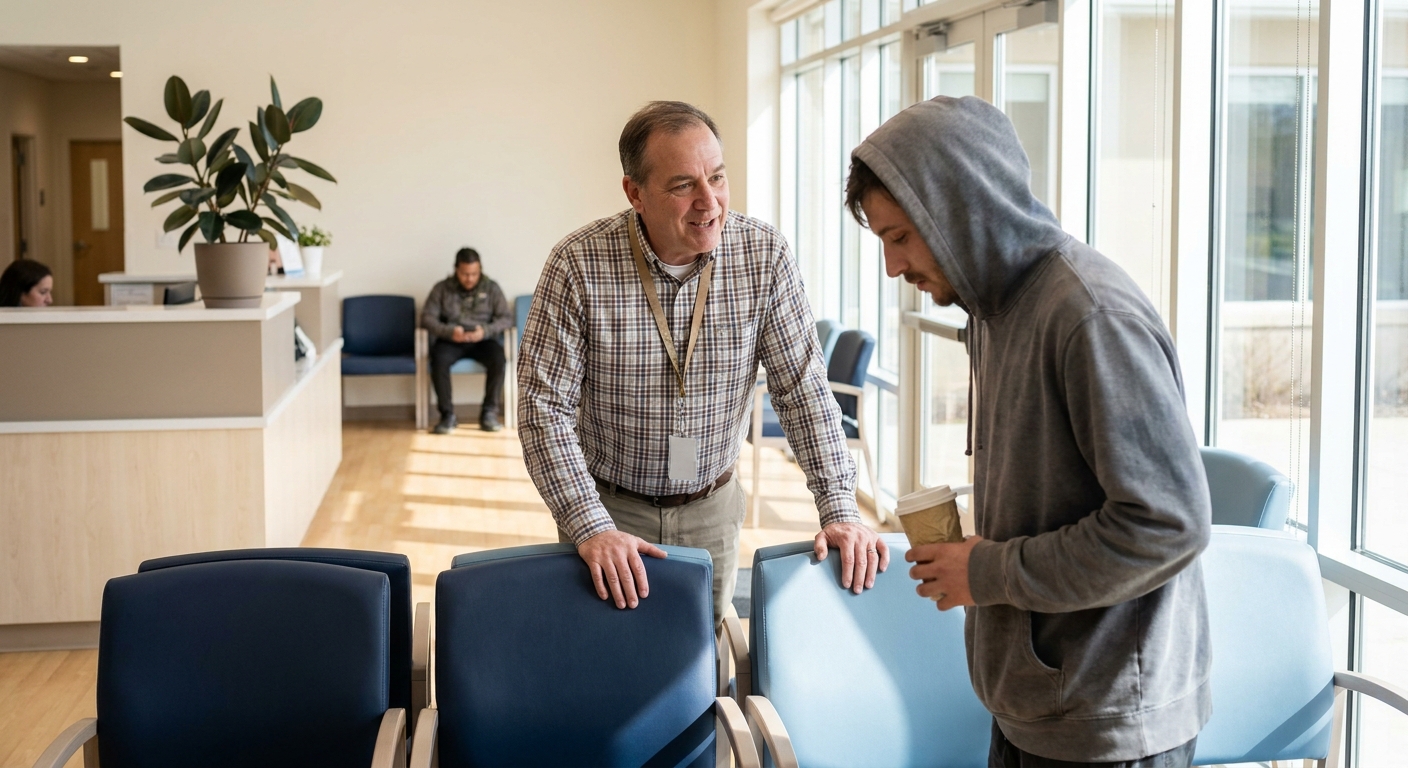
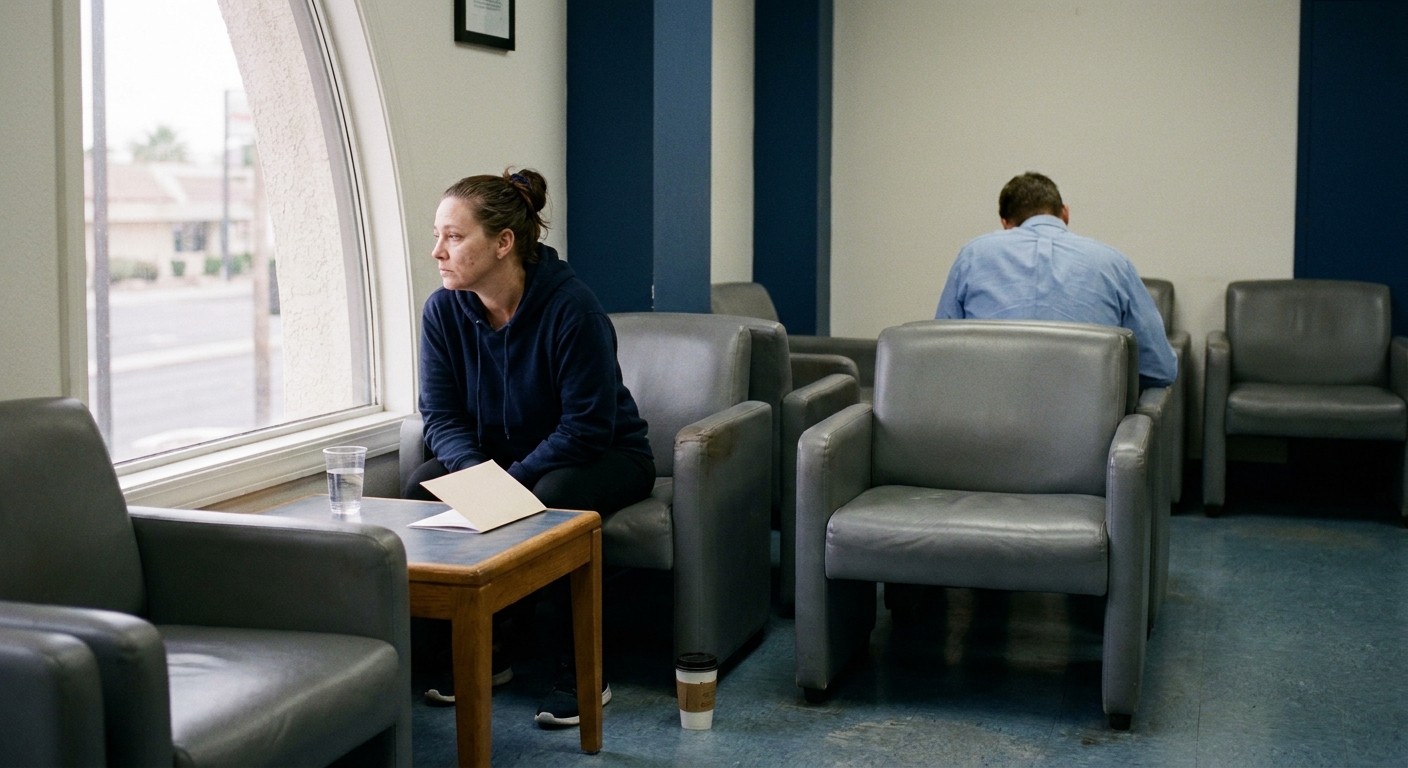
Vegas Stronger is at 916 N. Main Street in downtown Las Vegas, NV, in the Corridor of Hope. The clinic sits less than a mile from Fremont Street, in between the main shelters, so many people heading to a shelter for the night walk right past the front door. Peer support specialists work the lobby and waiting room seven days a week, and often the first person your loved one talks to is someone who has been where they are.
Here is the sequence Vegas Stronger walks every new client through, whatever substance they used:
- Front desk. Staff help your loved one sign a consent to treat and fill out screens, and they offer food or something to drink.
- Clinical assessment. A therapist does a clinical assessment, which starts the treatment plan.
- Psychiatric prescriber visit. A psychiatric prescriber does an assessment and a psych eval, and looks at whether medication assisted treatment fits.
- Medical assistant. Blood is drawn and an observed chain-of-custody urinalysis is done. When the prescriber recommends a long-acting injectable medication, the medical assistant orders it whenever possible and arranges medication delivery.
- Peer support specialist. Your loved one meets a peer support specialist and builds a peer plan that is separate from the clinical plan.
- Case management. Case managers work on ID, Nevada Medicaid enrollment, where your loved one will sleep, other medical issues, pets, and shoes or clothes. They start with whatever poses the biggest risk to safety.
- Tomorrow’s group. Staff tell your loved one which group to attend the next day and at what time.
- A ride. The transportation team drives them to a place to sleep with clean restrooms and schedules pickup for the next morning.
Sometimes the assessment shows that your loved one needs medically supervised withdrawal or another acute stay first, and when it is a close call, the team refers to detox. Vegas Stronger does not provide detox itself. Instead, case managers check insurance and bed availability and call to arrange the admission at one of the detox programs in Las Vegas. Drivers take your loved one there, a release of information is requested, and the team picks them up afterward so they can step into Vegas Stronger’s partial hospitalization program (PHP). Getting a detox admission on your own can be a hassle, so coming in for an assessment first means someone else handles those calls.
For a family, the first three days often fall apart in the gaps: between the phone call and the appointment, between the appointment and a bed, between tonight and tomorrow morning. Each step above is designed to address one of those gaps.
How long does meth rehab take, and how long does recovery take?
At Vegas Stronger, meth treatment lasts about 6 months on average, and some clients stay longer than a year. Recovery itself can run longer than treatment, with the deeper rebuilding of housing and work sometimes taking 8 to 12 months or more.
That means the 3-3-3 rule covers the opening chapter, not the whole book. For many clients, the first weeks happen in PHP, and the 3-month mark may land in intensive outpatient (IOP), on a path from PHP to IOP to outpatient care.
PHP is the most intensive stretch: 5 or 6 days a week of counseling and individual sessions, supported by case management, peer support, and psychiatric care. The focus is the primary substance use disorder and getting stable. Clinicians use CBT, DBT, Seeking Safety, and somatic approaches. Many people want to dig into old trauma right away, and the team usually encourages one step at a time: get grounded, build social supports, and stop using first. Once a person is stable and has a track record in therapy, often in IOP and sometimes in outpatient, deeper trauma-focused work such as EMDR and exposure therapies may begin.
IOP at Vegas Stronger runs 3 days a week, 3 hours per group. Groups are offered 7 days a week, in the morning, afternoon, and evening, so clients can fit treatment around work or a housing schedule. Clients are fed while they are in IOP, and the transportation team drives them to and from groups. On top of the clinical work, a personal trainer sees each client three times a week. Many clients also join the entrepreneur class to learn to manage spending, the theater program for role-play and camaraderie, and recovery yoga to breathe, relax, and get back in touch with their bodies. The thinking is that integrated behavioral health care depends on the client being present, so the program tries to remove as many reasons to miss a day as it can. You can read more about how outpatient treatment works at Vegas Stronger.
While treatment steps down, two other ladders run alongside it. Housing often moves from a congregate shelter to sober living to independent living, through Vegas Stronger’s housing partners. Work often moves from a treatment-period job to gainful employment. Many people are not ready for a career after a week or a month of getting stable, but after about 60 days in treatment plus around 6 months of waking up, showering, and showing up on time to a job like parking lot attendant or phone room work, some are ready for a union job or a wage they can live on. That is the 8 to 12 month window, far past any 3-3-3 countdown.
This is why Vegas Stronger describes itself as “almost the antithesis of a 28-day rehab.” People may stay longer because they have real mental, behavioral, physical, and social rebuilding to do. One client who completed the program was sober, housed, and employed after one year; that is one person’s experience and not a typical result.
What do they give people in rehab for meth?
Behavioral therapy carries most of the weight in meth care, with medical support for symptoms that can make stopping hard, like poor sleep, low mood, and cravings. Meth care has no go-to medicine the way opioid care has buprenorphine or naltrexone, so the plan is built around counseling, structure, and close follow-up.
Cravings do not necessarily stop on day 3, in part because of how the brain changes with repeated use. The Surgeon General’s report on the neurobiology of substance use describes addiction as a repeating three-stage cycle: binge and intoxication, withdrawal and negative feelings, and preoccupation and craving. The flat, irritable, worn-out feeling after stopping, and the pull to use again weeks later, are part of that cycle. They are not proof that a person does not want to get better. They are also why NIDA stresses that getting through withdrawal is not the same as treatment, and that care should be fitted to the person.
On the therapy side, the Surgeon General’s Report on Alcohol, Drugs, and Health names cognitive behavioral therapy (CBT) and contingency management among the behavioral approaches with research support for stimulant use. CBT helps a person spot the thoughts, places, and moods that lead to using and practice other responses. Contingency management gives small, real rewards, such as vouchers, for drug-free tests, and it works on the same reward system meth affects.
At Vegas Stronger, the psychiatric prescribers on site may use medications to help with withdrawal symptoms, cravings, and sleep. They choose for each person and treat any underlying psychiatric condition at the same time. The program is abstinence-based, so medication is a tool that supports stopping, not a replacement for recovery work. In the first months, care for meth use at Vegas Stronger can include:
- Withdrawal management: a same-day assessment to decide whether outpatient care is safe, with referral and a ride to a detox program when it is not
- Therapy: CBT, DBT, Seeking Safety, and somatic approaches in PHP and IOP, with EMDR and exposure therapies later, once a person is stable
- Prescriber care: medications chosen to address withdrawal symptoms, cravings, sleep, and co-occurring mental health conditions
- Peer support: a peer support specialist assigned to every client, with a peer plan alongside the clinical plan
- Case management: ID, Medicaid enrollment, a place to sleep, and other medical needs
- Safety supplies: Narcan for every client, plus fentanyl and xylazine test strips
- Body and routine: a personal trainer three times a week and recovery yoga
Early engagement may matter more than many families realize. Vegas Stronger’s CEO reports that methamphetamine overdoses in Nevada are rising to levels similar to opioids, and that people who use often misjudge how risky meth is compared with fentanyl.
One more safety point. If your loved one also drinks heavily, uses benzodiazepines, or uses opioids, stopping everything at once can require medical supervision, and alcohol and benzodiazepine withdrawal in particular can be dangerous. That is why the same-day assessment asks about last use, amounts, past withdrawals, and seizure history before anyone decides where care starts.
What if you miss a milestone or return to use?
Missing a 3-day or 3-week mark does not mean recovery has failed, and it does not close the door. Vegas Stronger does not have a three strikes rule, and people can come back after a recurrence.
A rigid timeline can do quiet damage. If a person believes they had to “make it” to day 21 and they used on day 19, the shame can be louder than the craving, and shame can keep people away from the very place that could help. Many families have watched it happen: one slip turns into weeks of hiding because coming back feels like admitting defeat.
Vegas Stronger sees itself as the last house on the block for some of the most underserved people in Las Vegas, and the team takes a long view on purpose. One client came in looking like a normal skater and talking a big game, sure he could keep some recreational drug use going. He had multiple recurrences and multiple incarcerations between treatment episodes, and each time he came back he looked materially worse, but he kept coming back. Today he is abstinent from drugs and alcohol and on the long road of rebuilding his life. The team would not call him a success story yet. They would call him a work in progress, and that is the point. For some people it takes two, three, or 10 treatment episodes before they get well, become self-supporting, rebuild their self-esteem, and work a program of recovery.
Many of the people who walk in have been through treatment before, and some notice right away that this program does not show them the door for being human. If your loved one uses again, one helpful step may be to help them get back in front of the same team as quickly as possible, so the plan can be adjusted rather than started over from zero.
How can a family start today, and what does insurance cover?
You can call Vegas Stronger 24/7, and admissions starts by working out the right level of care, not by clearing insurance hurdles. Vegas Stronger accepts Aetna, Blue Cross Blue Shield, Cigna, UnitedHealthcare, and Medicaid, and case managers help people enroll in Nevada Medicaid.
What your loved one’s plan pays depends on that plan, including any deductible, copay, or coinsurance, so ask the team a benefits question when you call. It may also help to know that under the federal Mental Health Parity and Addiction Equity Act, health plans that offer substance use benefits generally cannot make them more restrictive than their medical and surgical benefits. If your loved one has no insurance, that is not necessarily a reason to wait, because getting Medicaid started is one of the first things case management works on, often the same day as the assessment.
Here are the ways to find meth treatment in Las Vegas right now, including free help:
- Call Vegas Stronger any time, day or night. Admissions takes calls 24/7 and can help arrange an assessment.
- Come in for same-day access. There is no waiting list, and the first visit ends with a plan for tonight and tomorrow.
- Let the team handle detox if it is needed. If the assessment shows detox should come first, case managers arrange the admission and drivers take your loved one there.
- Get help with Medicaid. Case managers help with Nevada Medicaid enrollment, which can cover treatment for people who qualify.
- Call SAMHSA’s National Helpline for free. The line at 1-800-662-4357 is free, confidential, and open 24/7, and it can point you to state-funded, sliding-scale, and no-fee programs if cost is the worry.
- Search FindTreatment.gov. The federal locator at FindTreatment.gov lets you filter Las Vegas programs by payment type, including free and Medicaid options.
- Call or text 988 in a mental health crisis. The 988 Suicide and Crisis Lifeline is free and open around the clock.
- Call 911 in an emergency. If your loved one is unresponsive, having trouble breathing, or in danger, call 911 first.
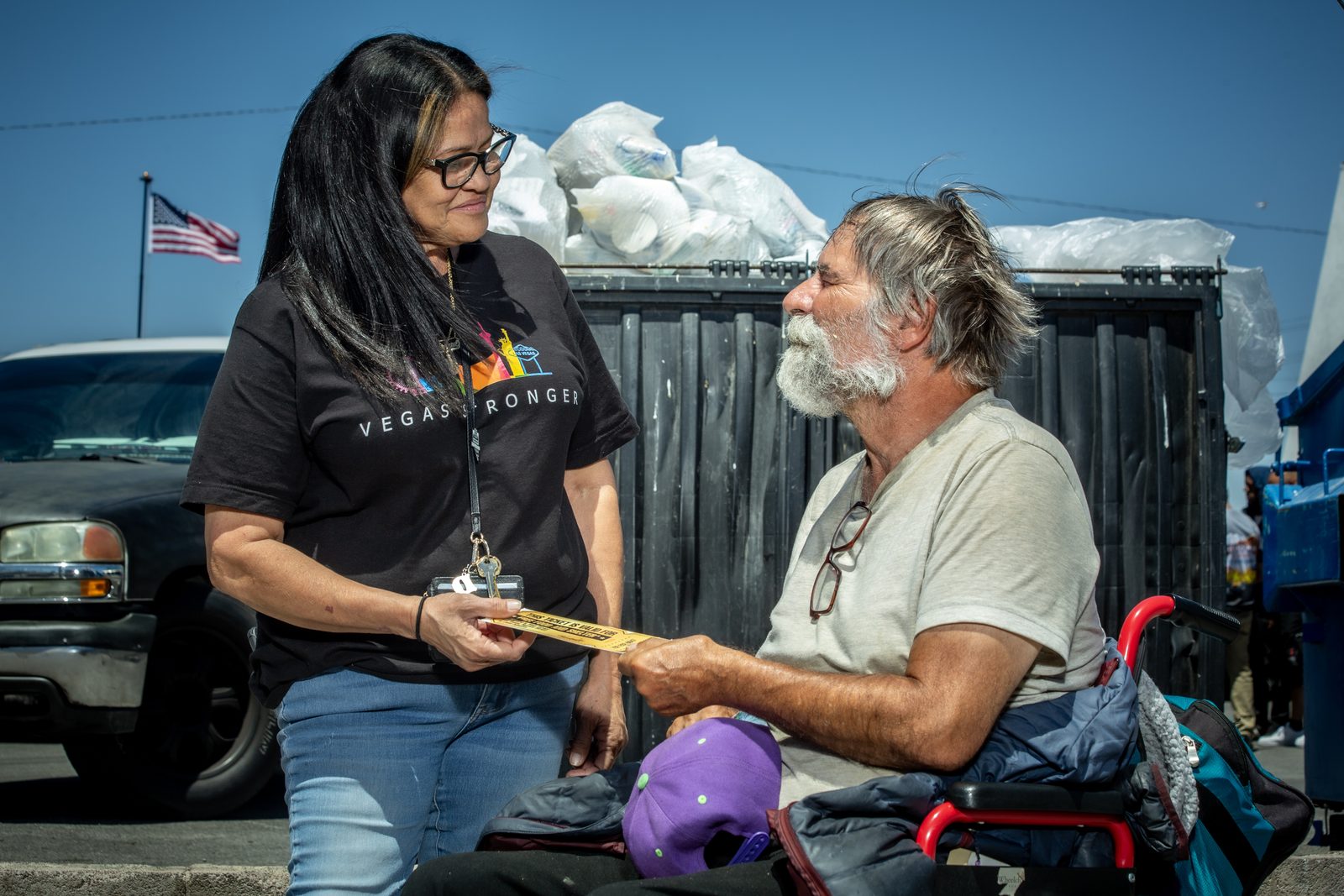
If your loved one is not ready, you cannot force them, and Vegas Stronger will not either, because everyone has agency. What the team can do is leave the door open. One staff member remembers stopping to talk with a woman on the street, asking her how long she wanted to live like that, handing her a golden ticket, and walking away to let her sit with it. On her own terms, she walked in. She was living with mental illness and using opioids and methamphetamine. With medication and counseling she stopped using, spent more than a year in a sober living home, and today she is a mother who does outreach of her own. Hers is one person’s experience, and others’ paths may look different.
Quick answers about the 3-3-3 rule and meth recovery
These are the short answers families ask for most, and each one ties back to the details above.
Is the 3-3-3 rule a medical guideline?
No. It is an informal shorthand for the first 3 days, 3 weeks, and 3 months of early recovery. It does not come from any clinical body or federal agency, and real timelines differ from person to person.
Does the 3-3-3 rule apply to meth recovery?
It can work as a rough map of the first days, weeks, and months. Meth recovery often takes much longer than 90 days and may need layered support, including therapy, prescriber care, housing help, and a reason to show up every day.
Is the 3-day methadone rule a meth treatment?
No. Methadone is an opioid medication, and that rule is about short-term dosing for opioid withdrawal. It is not used to treat meth use.
Is there a medication approved for meth addiction?
Meth care does not rely on one medication the way opioid treatment can. Care centers on behavioral therapies like CBT. At Vegas Stronger, psychiatric prescribers may use medications to help with withdrawal symptoms, cravings, and sleep problems as part of an abstinence-based plan.
How long does meth treatment usually last at an outpatient program?
At Vegas Stronger, the average stay is about 6 months, and some people stay longer than a year. Many move from PHP to IOP to outpatient care as they become more stable.
Can I start treatment in Las Vegas the same day?
Yes. Vegas Stronger offers same-day access with an assessment, a prescriber visit, and a peer support specialist, and it arranges detox first when the assessment shows it is needed.
What should you do in the next hour?
Make one call. If you or someone you love is trying to stop meth, call Vegas Stronger any time, day or night, to start a same-day assessment at the downtown clinic in Las Vegas, NV. If you want to talk through options first, call SAMHSA’s free 24/7 National Helpline at 1-800-662-4357.
Before you call, write down what your loved one has used over the last few days, including alcohol, pills, or opioids, and roughly how much. That one list can help the team decide quickly and safely whether the first stop is the Vegas Stronger lobby or a detox bed, and it may save time on the day it matters most.
So, what is the 3-3-3 rule for addiction worth in the end? It can offer a rough picture of what the first stretch of recovery might feel like. It cannot give your loved one a ride, a meal, a prescriber, and a group to attend tomorrow morning, and that part starts with a phone call.
You Don’t Have to Get Through the First 3 Days, 3 Weeks, and 3 Months Alone
If you’re thinking about stopping meth, it’s normal to wonder whether you can handle the rough early stretch the 3-3-3 rule describes. Needing support during that time doesn’t mean you’re weak, and it doesn’t mean you’ve failed before you’ve begun. The team at Vegas Stronger in Las Vegas, NV can talk with you about what substance use disorder treatment could look like for your situation, so call the office when you’re ready to take that first step.
- Individual experiences and timelines vary, and nothing here is a guarantee of any outcome.
- This article is for general education and is not medical advice.
- Stopping meth along with alcohol, benzodiazepines, or opioids can require medical supervision, so talk with a medical provider before stopping.
- Call 911 in an emergency.