
Expertise provided by David Marlon, Owner
If you are downtown tonight and not sure you are ready for treatment, here is something worth knowing. The walk from Fremont Street to any of the main downtown shelters takes you right past the front door of Vegas Stronger at 916 N. Main Street, less than a mile away. That short walk matters. Harm reduction on Fremont Street in Las Vegas may help lower the risk of overdose tonight, and the building you pass on the way to a shelter bed is a place where treatment can begin the same day you ask for it, if an assessment shows it is appropriate.
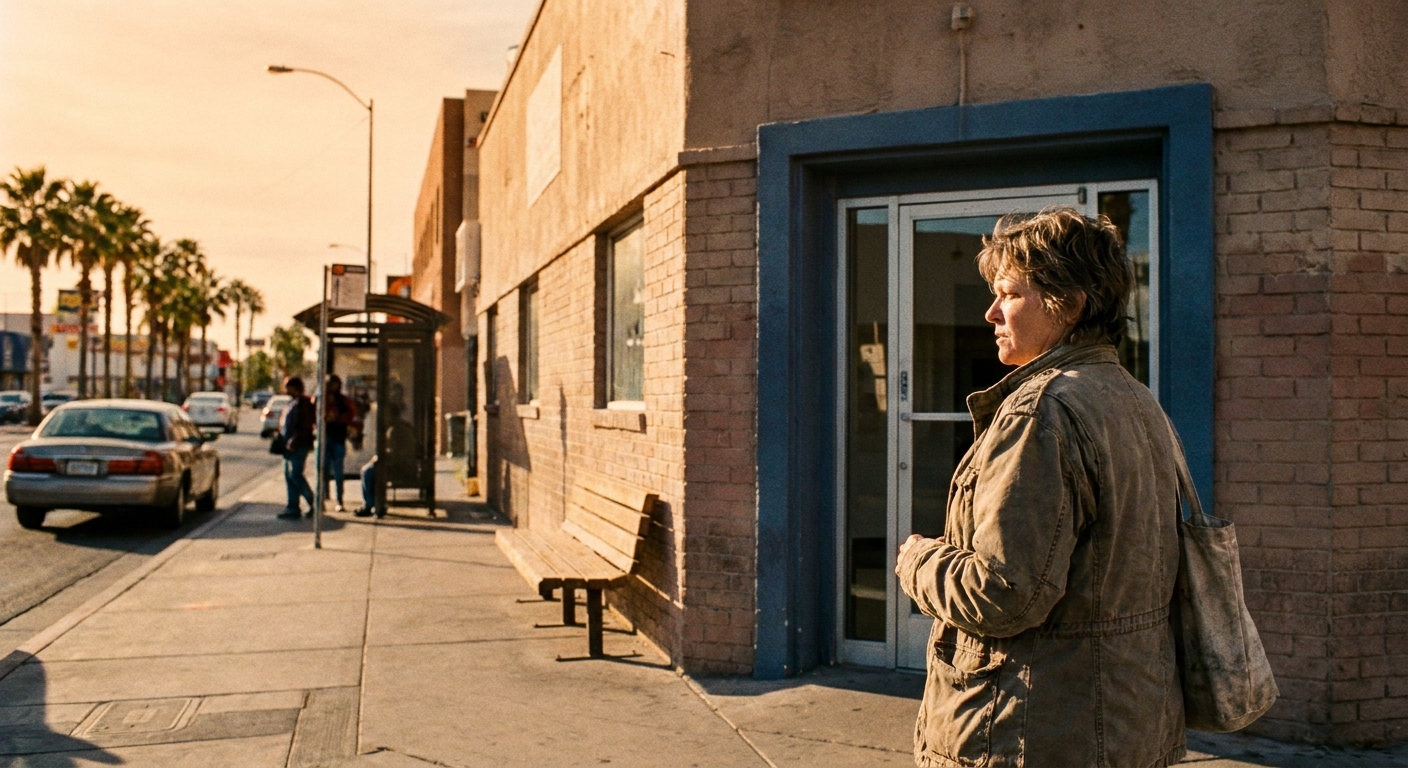
You may be a person sleeping downtown, carrying a backpack, unsure whether you want to stop or just want to get through the night. You may be a parent, a spouse, or an adult child who has not heard from someone in weeks and keeps searching for what is actually out there. Either way, you may be tired of hearing that help exists somewhere without anyone telling you where, how, or what happens once you get there.
This guide gives you plain answers. It covers what harm reduction means downtown, which tools you can get, and what those tools cannot do. It also shares one Las Vegas clinic’s candid view on where the urgency belongs, and what happens on the day someone says yes, or says not yet.
What Is Harm Reduction on Fremont Street in Las Vegas, NV?
Harm reduction is a set of practical steps intended to lower the chance that a person dies or becomes seriously ill from drug use. Examples include carrying Narcan, testing drugs before use, and using sterile supplies. It meets people where they are today. It is a first step that can support safety, and it is not the same thing as treatment.
Patient safety researchers writing for AHRQ’s Patient Safety Network describe harm reduction strategies as ways to improve safety for people who use substances. In plain words, harm reduction asks a simpler question than “Are you ready to quit?” It asks, “What might keep you safer right now?” For someone living near Fremont Street, the answer might be a nasal spray in a pocket, a test strip before using, or knowing which door to knock on when things get worse. Nevada has also looked closely at this work at the state level, and the Substance Use Response Working Group’s harm reduction recommendations lay out how the state’s working group thinks these tools should be used.
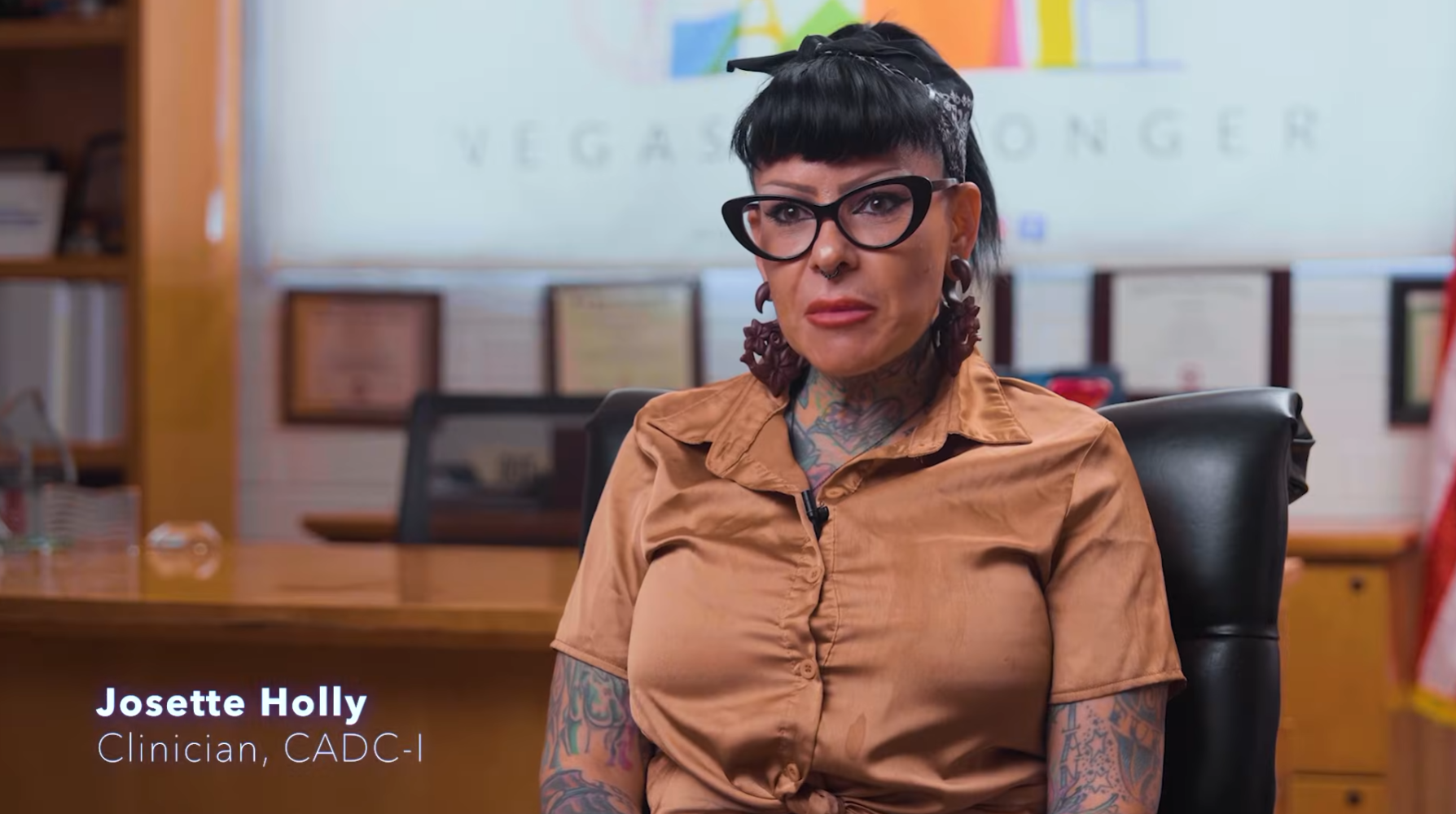
Downtown Las Vegas, NV is where this question gets real. The stretch around the shelters is known as the Corridor of Hope, and many people living there move between Fremont Street, the shelters, the camps, and the tunnels under the city. Vegas Stronger CEO David Marlon has worked in the Corridor of Hope for about 10 years. He says he has been in the tunnels around 100 times, has been to all the shelters and most of the homeless camps, and that a large share of the people living outside know him by name. From that time on the ground, he describes harm reduction tools as everywhere. In his words, there isn’t a homeless camp, a group in the tunnels, someone by the train tracks, or a shelter that doesn’t have quick access to Narcan.
So one useful way to think about it is this: harm reduction addresses “How do I get through tonight?” Treatment addresses “What comes next?” At Vegas Stronger, the first conversation tries to address both.
What Harm Reduction Tools Are Available Downtown?
The tools you are most likely to find downtown are Narcan (naloxone), fentanyl test strips, xylazine test strips, and syringe services programs. Vegas Stronger hands out several of these in the first encounter. It also offers something many harm reduction sites do not: the option of a same-day start on medication for opioid use disorder, following a prescriber’s assessment.
Here is the first-encounter kit at Vegas Stronger, as the team describes it:
- Narcan for every client. Every person who comes through the doors gets naloxone.
- Fentanyl test strips. These check a drug for fentanyl before use.
- Xylazine test strips. Xylazine is an animal sedative showing up in the street supply, and it needs its own strip.
- A quick buprenorphine start. For people with opioid use disorder, the team will quickly begin buprenorphine after a prescriber’s assessment.
- A same-day path into treatment. If you want it, you can start today, with no waiting list.
Each of these does a different job. Narcan can reverse an opioid overdose long enough for help to arrive. Test strips give you information before you use, so you can decide to use less, use with someone else nearby, or skip that batch entirely. Buprenorphine is a medication that can ease withdrawal and cravings, which the Vegas Stronger team says may lower overdose risk and may make it easier for some people to stay engaged in counseling. The prescriber times that first dose with care, because starting buprenorphine too soon after fentanyl can bring on sudden, severe withdrawal. A Brookings paper on harm reduction reviews how tools like naloxone and syringe services programs fit into efforts to improve health outcomes for people who use drugs. If you want to learn more about how medication works in treatment, Vegas Stronger’s guide to its opioid treatment program walks through it.
Syringe services are part of the downtown picture too. Marlon says the needle exchange here has handed out over 1 million needles in Clark County, which has fewer than 3 million people. Vegas Stronger does not list a syringe exchange among its own services, and locations and hours change, so check the latest listings from the public health district that serves Clark County for current sites. What Vegas Stronger can do is the next part. If you walk in holding any of these tools and say you want more than getting through the night, the team can begin your assessment that same day.
What Can Narcan and Test Strips Not Do?
Narcan only reverses opioid overdoses. It will not reverse a methamphetamine overdose, it will not undo the sedation caused by xylazine, and a test strip only checks for the one substance it is made to detect. That is why you should call 911 for every overdose, even after giving Narcan.
This gap matters downtown. Based on his own caseload, Marlon says Nevada’s drop in opioid overdoses has lagged behind the national drop. He also says methamphetamine overdoses among the people he sees are rising to levels similar to opioid overdoses, and that many people wrongly treat meth as the safer drug compared with fentanyl. These are his observations from the clients Vegas Stronger serves, not official state figures. Still, they point to a real danger: a person who only carries Narcan may think they are protected when the drug in front of them is a stimulant Narcan cannot touch. A stimulant overdose can look like chest pain, overheating, a seizure, severe agitation, or collapse. Narcan will not address any of that. A 911 call can.
Xylazine creates a different problem. It is a sedative, not an opioid, so Narcan will not wake someone up from its effects. Because xylazine is often mixed with fentanyl, you should still give Narcan if someone is not breathing, call 911, and stay with them. Test strips have limits too. A negative fentanyl strip does not mean a drug is safe, because fentanyl is often mixed unevenly and the strip may miss it. It also tells you nothing about xylazine, meth, or other substances. Marlon also warns that benzodiazepines are still widely prescribed and misused, and that withdrawal from them can be dangerous enough to need a medical setting. The honest message is simple: these tools may reduce some risks, they do not remove them, and risk is also shaped by whether a person continues to use.
Is Harm Reduction Enough? One Las Vegas Clinic’s View
Vegas Stronger CEO David Marlon’s answer is no, not on its own. In his view, Las Vegas has leaned heavily on harm reduction, and he believes helping unhoused people with mental illness and substance use leave street conditions matters more than keeping them comfortable there. This is his opinion, built on a decade of work downtown, not settled fact.
Marlon says Las Vegas, like many cities, has “gone too far with harm reduction” and has “overspent on harm reduction” compared with evidence-based integrated behavioral health care. He argues for more aggressive interventions and same-day treatment, and less focus on making life on the street a little safer. He is careful about what he is and is not saying: “I’m not diminishing the importance of saving lives, I’m increasing the importance of immediate interventions and same-day access to integrated Behavioral Health Care treatment.” That is why the same clinic that hands every client Narcan also pushes to get people through the door the same day.
His reasoning comes from what he has seen in the tunnels and camps. He says “nothing good is happening on the streets, in the tunnels or in the encampments.” He also pushes back on the common belief that homelessness is mainly a housing problem. Most people who don’t know homelessness think the answer is housing, he says, and “they could not be farther from the truth.” In his view, integrated behavioral health care, which treats substance use and mental health together in one plan, is “the path to address our homelessness crisis.”
Many public health groups see harm reduction and treatment as partners, and Marlon agrees both belong. His argument is about where the urgency goes. For you, that means you do not have to choose. Harm reduction on Fremont Street in Las Vegas can keep Narcan in your pocket tonight, and you can still walk into a same-day assessment tomorrow morning.
How Do You Get From Fremont Street to Treatment Today?
You walk or you call. Vegas Stronger’s clinic at 916 N. Main Street is less than a mile from Fremont Street, sits between the main downtown shelters, and offers same-day access with no waiting list. The 24/7 phone line can help arrange an assessment if you cannot walk in.
The location is the reason outreach downtown works well for Vegas Stronger. Marlon points out that if you are on Fremont Street and plan to sleep at any of the downtown shelters, you have to walk right by the clinic. That turns treatment from a long trip across the city into a stop on a route you are already taking. Vegas Stronger is also a designated Clark County Coordinated Entry site, which means it is one of the places where a person can get connected into the county’s homeless services system. If you are farther away and call in, the team will encourage you to take a bus or a rideshare to the clinic. The outreach team also tries to bring people back to the main campus on the Vegas Stronger bus.
You do not need to have your life in order to walk in. You do not need an ID in hand, a charged phone, or an insurance card. If you have a pet, that is part of the plan, not a reason to turn you away. Case managers handle identification, Medicaid enrollment, where you will sleep, other medical issues, pets, and even shoes or clothes if you need them.
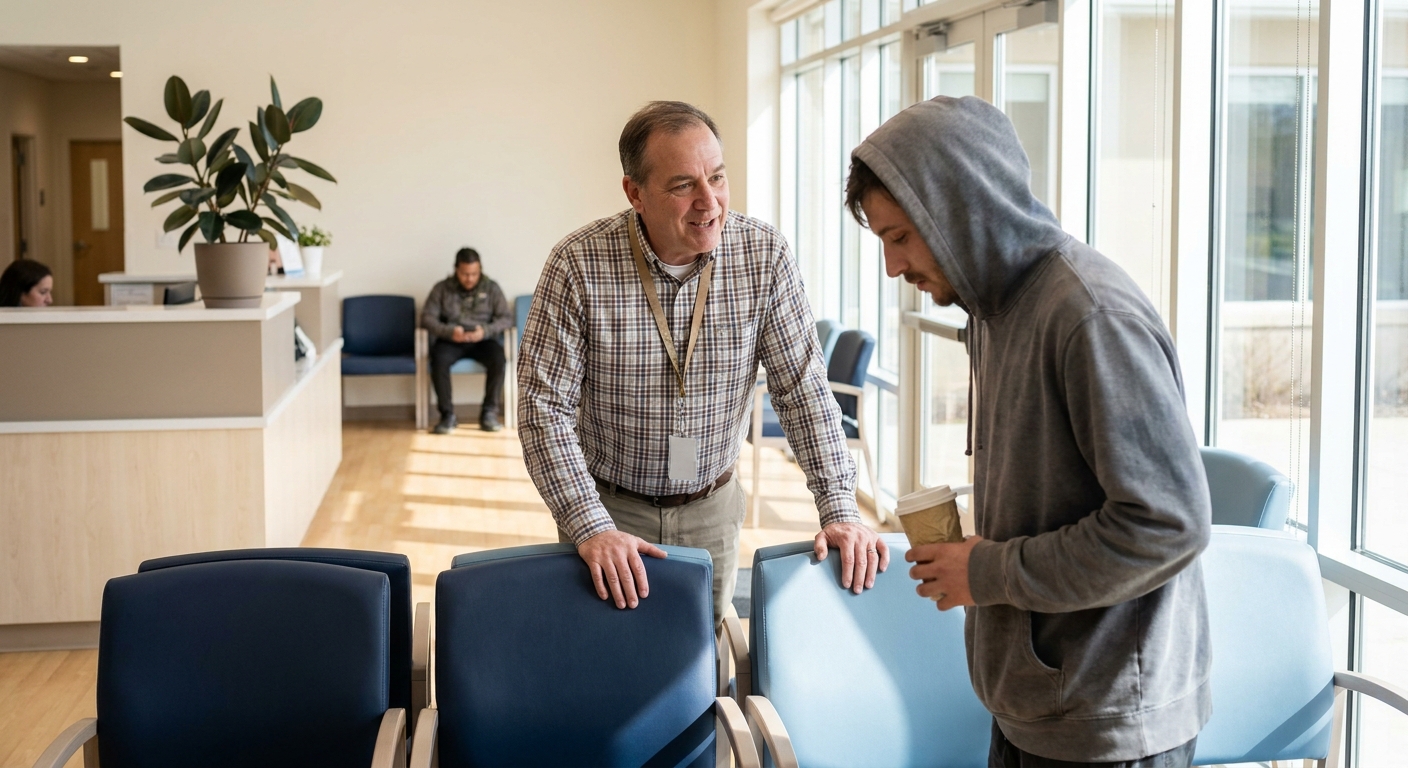
The first people you are likely to meet are peer support specialists, who work the lobby and waiting room seven days a week. They help with the basics first, like where the restroom is, something to eat, or a change of clothes. Then they talk with you, often share some of their own story, and explain how the day will go so nothing feels like a surprise.
What Happens When Someone Says, “I Want Help Today”?
On the same day, you move through a set sequence at Vegas Stronger: paperwork and something to eat, a therapist, a prescriber, a peer, and a case manager. Then a ride takes you to a place to sleep, with a pickup already scheduled for tomorrow. There is no waiting list.
Here is how that day unfolds, in order:
- Consent and screens. The front desk team helps you sign a consent to treat and fill out some screening forms.
- Food or drink. Someone asks if you are hungry or thirsty and brings you something.
- Therapist assessment. A therapist does a clinical assessment, which is where your treatment plan starts to take shape.
- Psychiatric prescriber evaluation. A prescriber completes an assessment and psych eval and talks with you about medication assisted treatment.
5. - Blood draw and observed urinalysis. The medical assistant handles labs and an observed, chain of custody urine test.
- Peer support plan. You meet a peer support specialist and build a separate peer plan.
- Case management. A case manager works on your ID, Medicaid, where you will sleep, other medical needs, pets, and clothes.
- Tomorrow’s plan. Staff tell you which group to attend tomorrow and what time it starts.
- A ride and a bed. The transportation team takes you to a place to sleep with clean restrooms and schedules your pickup for the next morning.
Sublocade is a monthly, slow-release form of buprenorphine. Vivitrol is an injectable form of naltrexone, and you must be fully through opioid withdrawal before you can start it.
Some people need a higher level of care first. Vegas Stronger does not provide detox. When withdrawal risk is more than an outpatient clinic can handle safely, Marlon says, “When it’s a close call we refer to detox.” Case managers check availability and arrange the admission at one of the six detox programs in Las Vegas. They also ask you to sign a release of information so the team can stay in touch. Drivers take you there, and the team picks you up afterward so you can start outpatient care. Vegas Stronger’s guide to the first 72 hours of detox in Las Vegas explains what that stay is like and what comes next.
What If You Are Not Ready Yet?
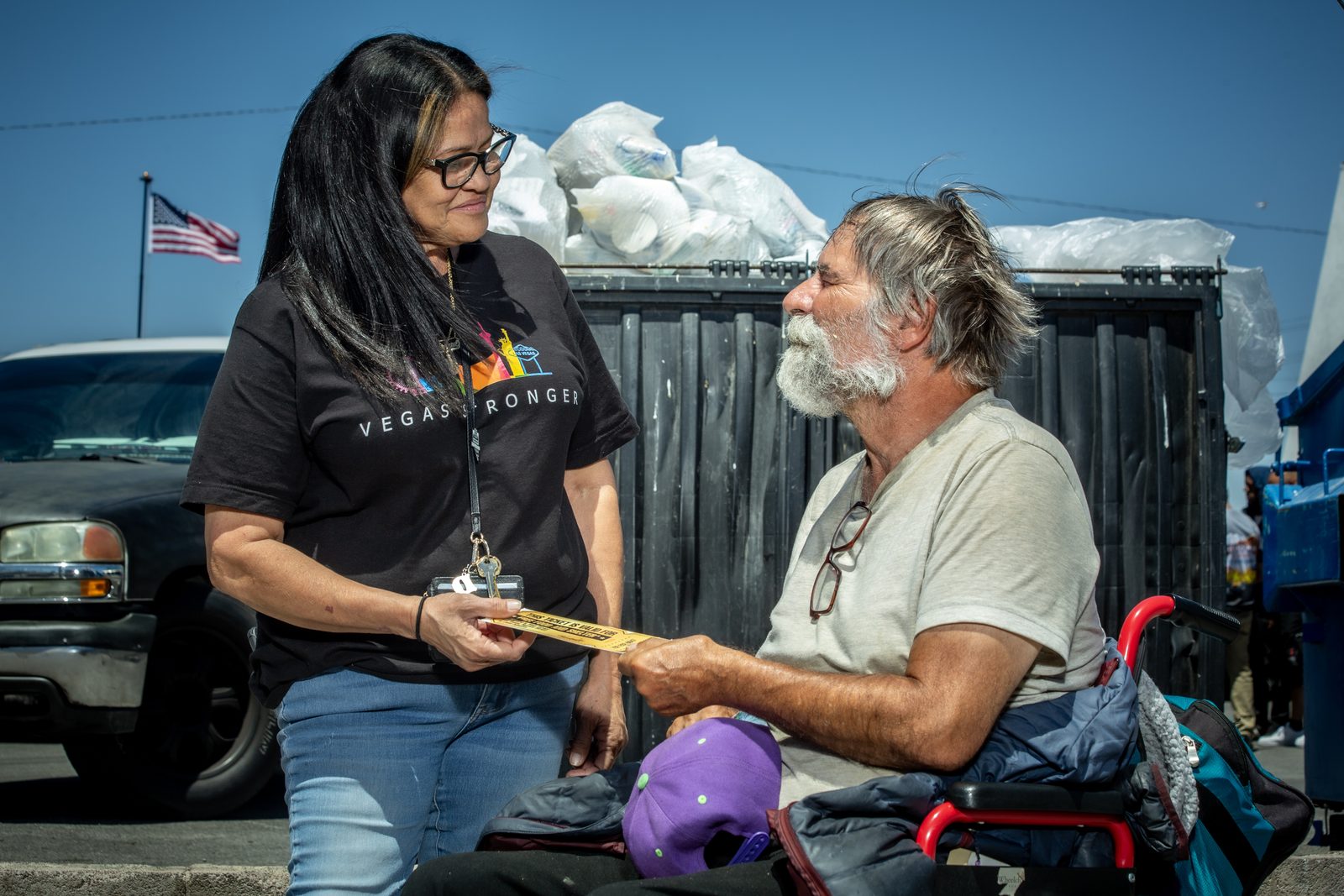
Then no one will force you. Vegas Stronger gives people a business card it calls a “golden ticket,” tells them the door is open, and lets them decide when to come in.
Marlon puts it bluntly: “it’s a free country,” and everyone has agency. The team does not drag anyone into treatment. Instead, they hand over a golden ticket, a business card, or both, and make sure the person knows that when they are ready, Vegas Stronger will help. That small card can matter more than it looks. It turns a vague idea of “getting help someday” into a specific address, less than a mile away, that you can walk to on your own terms.
Marlon shares one case, with identifying details left out to protect her privacy. He met a woman downtown and asked her why she was there. When she mumbled an answer, he asked whether she had lived like this long enough, and whether it was “time for you to get well and come inside.” He gave her a golden ticket and walked away. Later, on her own terms, she walked in. She was living with mental illness and using opioids and methamphetamine. According to Marlon, she stopped using and worked on her mental health with medication and counseling. He says she is now a mother and community member who does outreach herself. That is one woman’s experience, not a typical result.
Coming back is always allowed. Marlon says “we don’t have a three strikes rule” like many commercial treatment centers, and that Vegas Stronger sees itself as “the last house on the Block” for people who have run out of options. Some people have two, three, or even 10 treatment episodes. Marlon remembers one man he calls the bicycle guy, who came in talking a big game, had multiple recurrences and incarcerations between treatment episodes, and looked more worn down each time he came back. He kept coming back anyway. Today, Marlon says, this man is abstinent from drugs and alcohol and is rebuilding his life. “I wouldn’t call him a success story today but I would call him a work in progress.”
Marlon also says Vegas Stronger encourages enforcement of city and county laws against camping and loitering. People hold different views on that stance, and it is his position. What matters for you is that the open door does not close because you said no once.
What Does Treatment Look Like After the First Day?
After the first day, many people step into Vegas Stronger’s partial hospitalization program (PHP), then intensive outpatient (IOP), then outpatient care, with therapy, medication, peer support, and case management on one team. Treatment is abstinence-based, and medication assisted treatment is used as a tool within that approach.
In PHP, you get intensive counseling five or six days a week, with individual sessions backed by case management, peer support, and psychiatric care. IOP groups meet three days a week for three hours, with morning, afternoon, and evening groups running seven days a week. Medication options include oral buprenorphine or Suboxone, Sublocade, oral naltrexone, and Vivitrol, alongside other medications for cravings and sleep. The team is clear that it is fundamentally abstinence-based, so every client works toward a program of abstinence, with MAT as a support while they do the work. Marlon describes Vegas Stronger as “almost the antithesis of a 28-day rehab.” The average client stays about six months, and many stay over a year, because the rebuilding people take on is mental, physical, and social, and it takes time.
The care is trauma-informed, and it moves in a careful order. In PHP and IOP, clinicians use CBT, DBT, Seeking Safety, and somatic approaches. Deeper trauma work, such as EMDR or exposure therapies, comes later. It starts only after the substance use is addressed, mental health is stable, and a strong relationship with a therapist has formed. The team calls it a “one step at a time” focus: get grounded, build supports, address the fentanyl use, and then start working through the harder layers.
Peer support runs through all of it. Every client is assigned a peer support specialist. Around that core, Vegas Stronger adds a personal trainer who sees clients three times a week, recovery yoga, a theater program, and an entrepreneur class on money and spending. Clients also get meals and rides to and from the clinic from a transportation team whose members are each in recovery themselves. Marlon defines getting well as being sober, housed, employed, and ideally self-supporting. That is his goal for clients, and each person’s path is different.
How Can Family Members Help Someone Downtown?
Carry Narcan and learn how to use it, offer a Vegas Stronger card calmly, skip the ultimatums, call 911 in any emergency, and use the 24/7 line when your loved one says yes. Your steady presence may matter more than a perfect speech.
You may be afraid that if you push, your loved one will disappear, and if you do not push, you will lose them anyway. That fear makes sense, and it is why the golden ticket approach is designed with families in mind too. When you find your loved one downtown, keep it short and kind. Say you love them, hand them the card, and tell them the clinic is less than a mile away on N. Main Street, with no waiting list. Then let them sit with it. Arguing on a sidewalk rarely changes a mind, and an ultimatum can close a door you want to keep open.
Carry Narcan yourself, and practice before you need it. If someone will not wake up or is barely breathing, call 911, spray one dose of Narcan into one nostril, and stay with them. If they do not respond after two to three minutes, give a second dose in the other nostril. Once they are breathing, roll them onto their side. Remember the limits from earlier in this guide: Narcan will not reverse meth or xylazine, so a 911 call is never optional.
When your loved one says “I’m ready,” move quickly. Call the Vegas Stronger 24/7 line to arrange an assessment, or bring them straight to the clinic. If they say “not yet,” respect it, keep showing up, and keep the card in their hands. Each person has agency, and the choice to walk in has to be theirs.
How Do You Pay for Care at Vegas Stronger?
Cost should not stop the first call. Vegas Stronger’s case managers help with Medicaid enrollment and replacing ID, and the clinic accepts Medicaid, Aetna, Blue Cross Blue Shield, Cigna, and UnitedHealthcare. Call the 24/7 line to confirm your specific plan.
Many people downtown assume they cannot get care without insurance already in place. At Vegas Stronger, case management works on that problem during the first visit. If you are not enrolled in Medicaid, a case manager helps you apply. If you lost your ID, they help you replace it. You do not have to sort this out before you walk in.
Marlon is clear about how admissions works: “we are not hung up on verification of benefits, we are hung up on helping people.” He adds that the admissions process “is not about insurance, it’s about determining the appropriate level of care.” For families calling about a loved one with private coverage, it also helps to know that federal parity law generally requires many health plans that offer mental health and substance use disorder benefits to cover them no more strictly than medical benefits. You can read how this works for marketplace plans from CMS and for employer plans from the U.S. Department of Labor.
Every plan is different, so call the 24/7 line before assuming anything about your coverage. The team can talk through your plan and get the assessment moving at the same time.
Questions People Ask About Harm Reduction on Fremont Street in Las Vegas
These are the questions people living near Fremont Street, and the families looking for them, ask most often. Each answer is short so you can find what you need fast.
Where can I get Narcan near Fremont Street in Las Vegas?
Vegas Stronger gives Narcan to every client at 916 N. Main Street, less than a mile from Fremont Street. For other current distribution sites, check the latest listings from the public health district that serves Clark County.
Does Narcan work on a meth overdose?
No. Narcan reverses opioid overdoses only. It will not reverse a methamphetamine overdose or xylazine sedation, so call 911 for every overdose, even after giving Narcan.
Do fentanyl test strips catch everything?
No. Each strip checks for one substance, a negative result does not mean a drug is safe, and xylazine needs its own strip.
Can I start treatment the same day if I have no ID or phone?
Yes, you can begin intake the same day. Same-day intake at Vegas Stronger does not wait on an ID or a charged phone. Case managers help with ID, Medicaid, a place to sleep, and other needs after you arrive.
Does Vegas Stronger offer detox?
No. When detox is needed first, case managers arrange it with a local medical detox program, drivers take the person there, and the team picks them up afterward to begin outpatient care.
What if my family member is not ready for treatment?
No one is forced. Offer the card calmly, carry Narcan, avoid ultimatums, and keep the door open for the day they are ready.
Where Do You Start If You Want Help Tonight?
Start with one call or one short walk. Call the Vegas Stronger 24/7 phone line to arrange a same-day assessment, or walk in at 916 N. Main Street, Las Vegas, NV, less than a mile from Fremont Street.
Here is one practical thing to do right now, whether you are downtown or searching for someone who is. Write “916 N. Main Street” on the back of the card, on your hand, or anywhere that does not need a battery. Phones die, cards get lost, and the moment someone decides to come inside often arrives without warning. When it does, the address should already be with them.
Harm reduction on Fremont Street in Las Vegas may help a person get through tonight, but it was never meant to be where the story ends. The walk to the shelter goes past the front door anyway. If tonight is the night, stop in.
Ready When You Are, Las Vegas
Reading about harm reduction on Fremont Street may have stirred up questions about your own habits or those of someone you care about. You don’t need to have everything figured out or feel certain about quitting to reach out. The team at Vegas Stronger in Las Vegas, NV can talk through where you are right now and what substance use disorder treatment might look like for you, so call the office whenever you feel ready to take that step.
Individual experiences vary, and treatment decisions depend on a clinical assessment.