Your brother is not hard to find. He sleeps near the same overpass on Charleston most nights, you know which gas station he walks to in the morning, and you could drive there right now. The hard part is getting him from that sidewalk into a room with people who can address what put him there: the drinking, the drugs, the depression, the paranoia. Every program you call asks for the same things first: an appointment, an ID, a phone number for callbacks, and an insurance card he lost months ago. Homeless outreach Las Vegas families can count on has to close that gap, and Vegas Stronger built its program around closing it.
You are probably exhausted, and you may feel like the system was designed for people who already have their lives together. You are not wrong about that. You may also be afraid that if you push him toward help and he gets turned away one more time, he will stop listening to you completely.
Vegas Stronger is a nonprofit at 916 N. Main Street in Las Vegas. We address substance use disorder and mental health conditions together, in one integrated outpatient program, for people who are unhoused or about to be. We offer same-day access with no waiting list, and we accept Medicaid, BCBS, Aetna, Cigna, and UHC. Our case managers help with ID and Medicaid enrollment during the first visit, so missing paperwork is not the price of getting in the door. This page walks you through what outreach should mean, how our process works step by step, and what happens in the hard cases that other programs send away.
What Does Homeless Outreach in Las Vegas Actually Mean When Someone Has No Phone or Address?
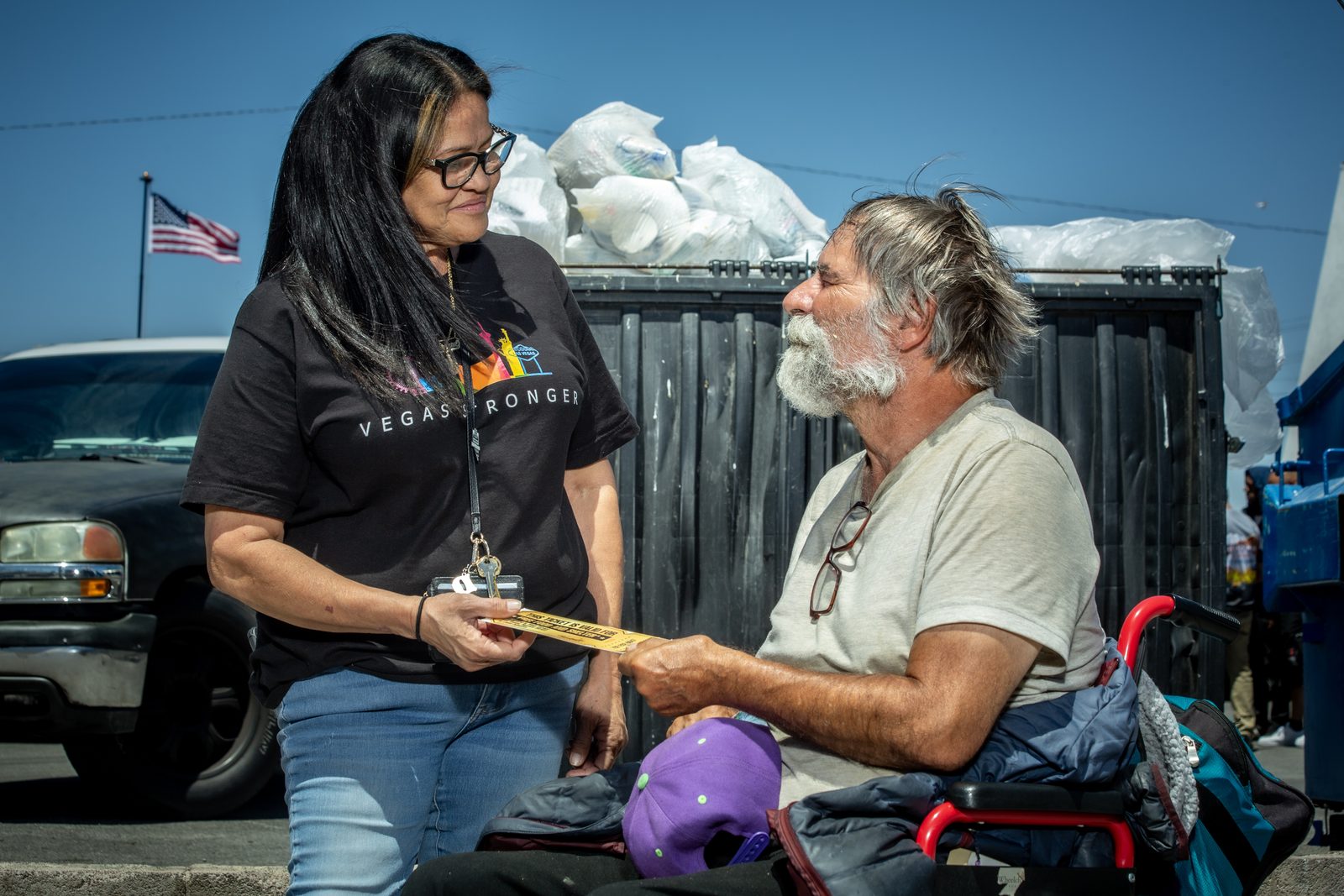
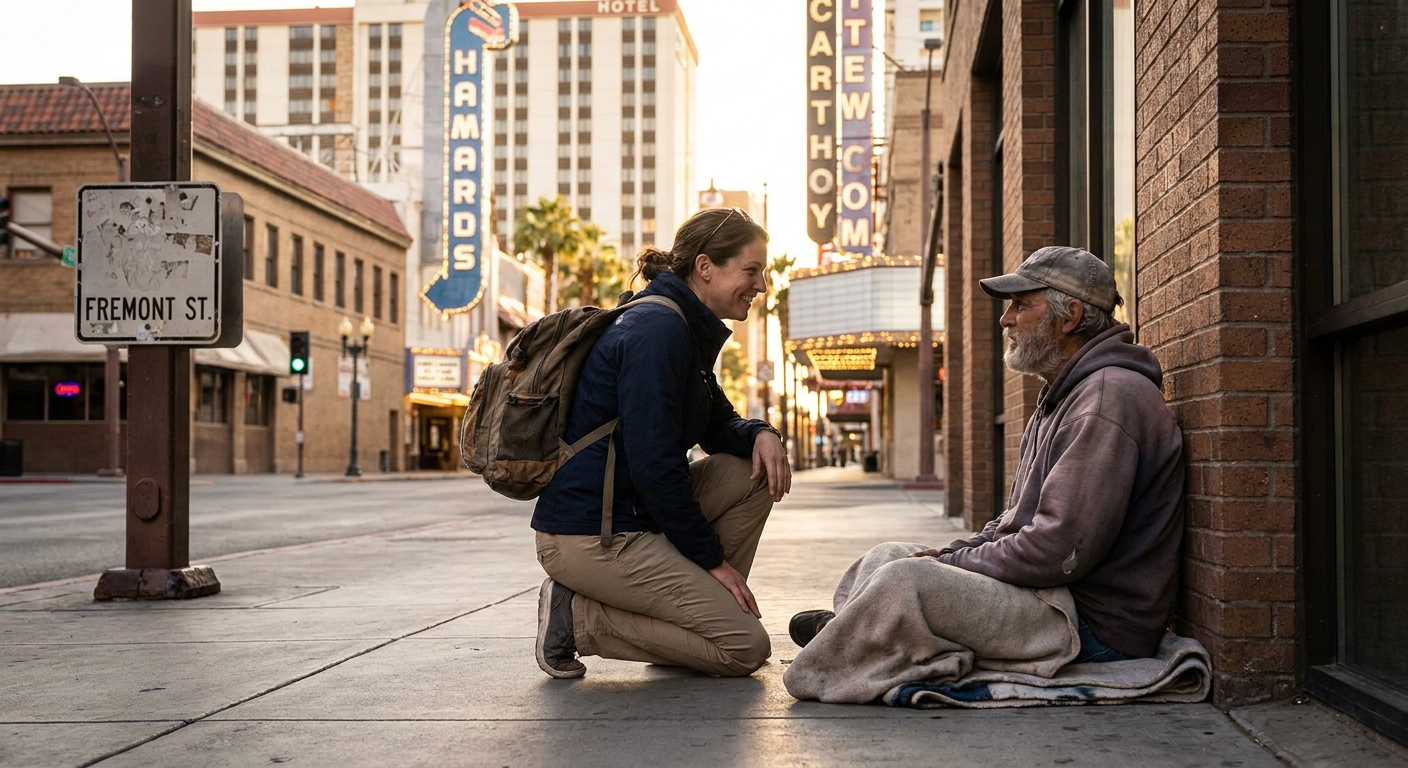
Homeless outreach means meeting a person where they are and then carrying them all the way into care, instead of handing them a phone number and wishing them luck. Outreach only counts if the person ends up in care, with a place to sleep and a reason to come back the next day.
Most programs fail at the handoff. Many intake processes assume the person has a car or bus fare, a working phone, a mailing address for insurance letters, a photo ID, and the ability to remember an appointment that is nine days away. Picture a hospital that only accepts people who can drive themselves to the emergency room. Someone living unsheltered usually has none of those things, because the phone got stolen, the ID disappeared in a sweep, and the address is a tent or a doorway or a friend’s couch that is not available anymore. Every requirement that sounds reasonable from behind a desk becomes a wall on the street.
Researchers look at getting people through the door as its own problem, separate from the quality of care once they arrive. You can see this in a review in the NIH’s PMC library on improving access to healthcare services. It also runs through the U.S. Department of Health and Human Services homelessness research collection, which looks at where health care, behavioral health, and housing meet. For your family, the practical meaning is simple. Don’t only ask a program “do you address this?” Ask “what do you do when he shows up with nothing?”
At Vegas Stronger, the answer is that showing up with nothing is normal, and our process was built for that person, not around them.
How Does Vegas Stronger Get Someone From the Street Into Care in One Day?
Vegas Stronger moves a person from first contact into care in a single coordinated visit, with same-day access and no waiting list. That visit includes consent, a clinical assessment, a psychiatric evaluation, medication, a peer plan, and case management for ID, Medicaid, and housing.
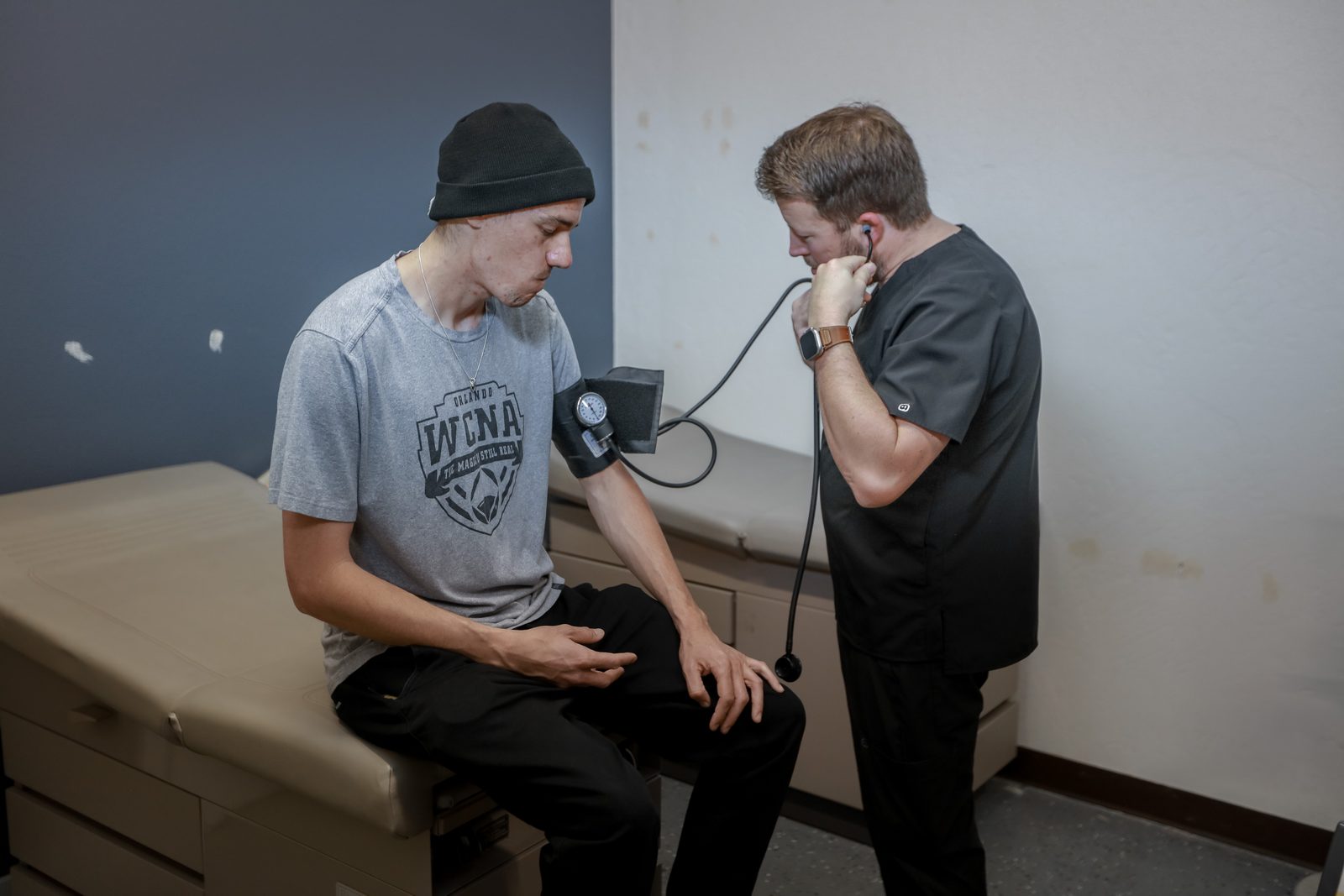
The process starts at our front desk, where staff help your loved one sign consent and complete screens, and nobody hands him a clipboard and walks away. Next, a therapist does a clinical assessment while we offer him food and something to drink, because it is hard to answer questions honestly when you have not eaten since yesterday. A psychiatric prescriber then does a psych eval and addresses medication assisted care. When it fits his needs, a medical assistant orders long acting injectables, because a shot that lasts for weeks is much easier to stay on than a pill bottle that gets lost or stolen on the street. The medical assistant also orders other medications for delivery and completes blood draws and observed chain-of-custody urinalysis, so the plan rests on real clinical information.
From there, a peer support specialist builds a peer plan with him, and a case manager takes on the practical side. That means replacing his ID, making sure his Medicaid enrollment is in place, figuring out where he will sleep tonight, and coordinating his medical problems. It also means the things nobody else asks about, like his dog, his clothes, and his shoes. The plan is built from that assessment, and he can enter PHP, IOP, or outpatient care depending on what he needs.
The structure behind all of this matters if you are trying to decide whether to trust us. Vegas Stronger is a designated Coordinated Entry site for the Las Vegas housing system, connected to local social services and housing resources. We are Joint Commission Accredited, hold LegitScript certification, and carry state co-occurring enhanced licensure, which reflects our focus on people living with both a substance use disorder and a mental health condition. Most of the people we see have both, and addressing only one rarely holds.
What If He Needs Detox, Has No Ride, or Has Had Setbacks Before?
These are the situations many programs refer out, and Vegas Stronger handles each one directly. Case managers arrange detox with a medical partner when it is needed, a transportation team made up entirely of people in recovery handles rides, and we don’t have a three strikes rule, so a past setback never closes the door.
Vegas Stronger does not provide detox on site. When someone is in active withdrawal and needs acute medical detox before outpatient care can start safely, our case managers arrange the admission at a trusted medical detox partner. Our drivers take him there, and he signs a release of information (ROI) so both teams can talk. When detox ends, our staff picks him up and brings him back to begin outpatient care, usually starting in our PHP. That pickup matters more than almost anything else, because the days right after detox are when people most often slip away. Tolerance drops during detox, which makes a return to use in that window especially dangerous, and a family member waiting on a callback can lose him in the gap.
Transportation is the second place outreach usually falls apart, since a person living unsheltered cannot reliably get across town for group at 9 a.m. Our transportation team picks clients up, brings them to group, and takes them back to where they are sleeping, then does it again the next day. Every driver on that team is in recovery, so the first person your loved one talks to in the morning has lived some version of his story. We also feed all our clients while they are in IOP. In our experience, both of these steps help people continue in care, because integrated behavioral health care only works when the person is actually in the room.
The third hard case is setbacks. Many families have watched someone get discharged for using, then wait months to be readmitted somewhere else. Vegas Stronger accepts people back through multiple setbacks, because recovery from a substance use disorder rarely moves in a straight line, and losing access to care at the moment of a setback can make everything harder.
Who Keeps Your Loved One From Disappearing Between Appointments?
Getting him in the door is only the first part, and keeping him connected is where most of the work happens. At Vegas Stronger, peer support specialists with lived experience and case managers work side by side so your loved one always has a person to call. That team handles the practical problems that pull people out of care, from a lost ID to a sick pet, while clinicians stay focused on clinical care.
Peer support specialists are people in long-term recovery who are trained to walk alongside clients. When your brother does not trust a therapist yet, he will often trust someone who has slept outside, been to jail, or used the same drugs he has. The peer plan they build together covers the next few days and weeks: who he will check in with, what he will do when the cravings hit at night, and how he will get to group if the bus does not come. Case managers work right next to them on ID, Medicaid enrollment, housing placement through our housing partners, medical coordination, pets, and clothes. When case managers, housing partners, and the transportation team work together, the result is a recovery oriented system of care that feels close to residential, even though it is outpatient.
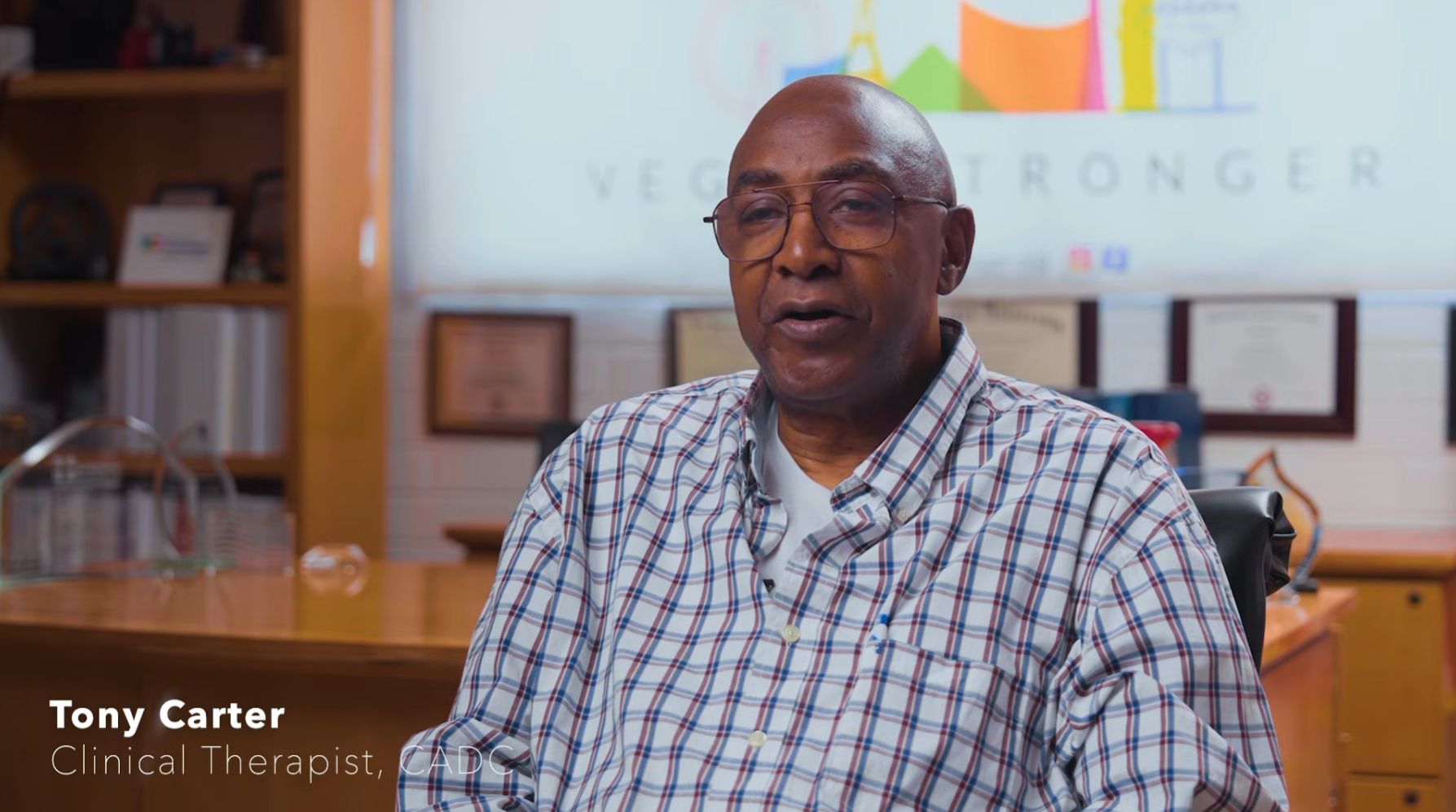
Behind that frontline team is a support structure most families never see. Our prior authorization, billing, and admissions teams carry the paperwork, so our clinicians can focus on being clinicians. Our clinical director and clinical manager are both LCSWs who have each practiced in Las Vegas for about 20 years. Our Medical Director is an active MD, and five psychiatric prescribers work on site. Our CEO is a PsyD who holds LCADC-S, CPC, and PRSS-S state certifications, and both the CEO and the Medical Director are in long-term recovery themselves, for more than 30 and more than 20 years. Community health workers and our medical and psychiatric teams round out the group, and as a nonprofit, Vegas Stronger holds a Platinum-level transparency rating for how openly it reports its finances and results.
This is comprehensive support in the literal sense: trauma-informed, evidence-based care from people who stay with your loved one long enough to make a difference.
What Has Been Vegas Stronger’s Experience With People Other Programs Gave Up On?
We serve the people other programs gave up on, sometimes after three or four tries somewhere else. Many of our clients arrive after being discharged from multiple facilities, and the bicycle guy’s story captures what that path can look like.
We’re the last house on the Block. That means we see the people other programs gave up on, sometimes after three or four tries somewhere else. In our clinical experience, many of the people experiencing homelessness we meet can engage with integrated behavioral health care. People sometimes assume those who are unhoused are too sick or too chaotic for outpatient care, but we’ve found that assumption is rarely accurate. The small fraction who need more are people whose developmental disability, severe psychiatric symptoms, or violent behavior would make group care unsafe for them or others, and they need a higher level of care, such as a state psychiatric hospital. Vegas Stronger does not offer long-term residential care for those cases, and we will tell you so honestly.
Here is one client’s story, with details kept general to protect his privacy. His story is one client’s documented experience, not a typical result, and every person’s path through recovery looks different. A young man we call the bicycle guy came in looking like a regular skater, talked a big game, and still connected with almost everyone around him: the psychiatrist, his case manager, his peer support specialist, a fitness trainer, a yoga instructor, his counselor, and our CEO. Then came setbacks and incarcerations, more than one of each, and every time he came back he looked worse, until he looked like he had lived on the street for years. Because we don’t have a three strikes rule, the door stayed open every single time. In his case, today he is not using drugs or alcohol and is working on the Long Road of rebuilding his life. Outcomes vary from person to person, but his journey shows what comprehensive support can make possible when the door stays open. We wouldn’t say he’s finished today, but we would say he’s making progress.
That is why our model is the antithesis of a 28-day rehab. Short programs end right when the hard part starts, and staying in care for months, with housing and food and rides handled, is part of breaking the cycle. The City of Las Vegas reports each year to HUD on how federal grant dollars support local housing and homelessness work, as you can see in its FY 2024-25 performance report. Housing alone is not enough, though. We believe pairing housing with real care is one path to address our homelessness crisis.
Who Can Start Homeless Outreach Las Vegas Services for Someone You Love?
Anyone can start the process: the person themselves, a family member, or a community partner like a shelter worker or social worker. Your loved one does not need a phone, an ID, or an address to begin, and Vegas Stronger offers same-day access with no waiting list.
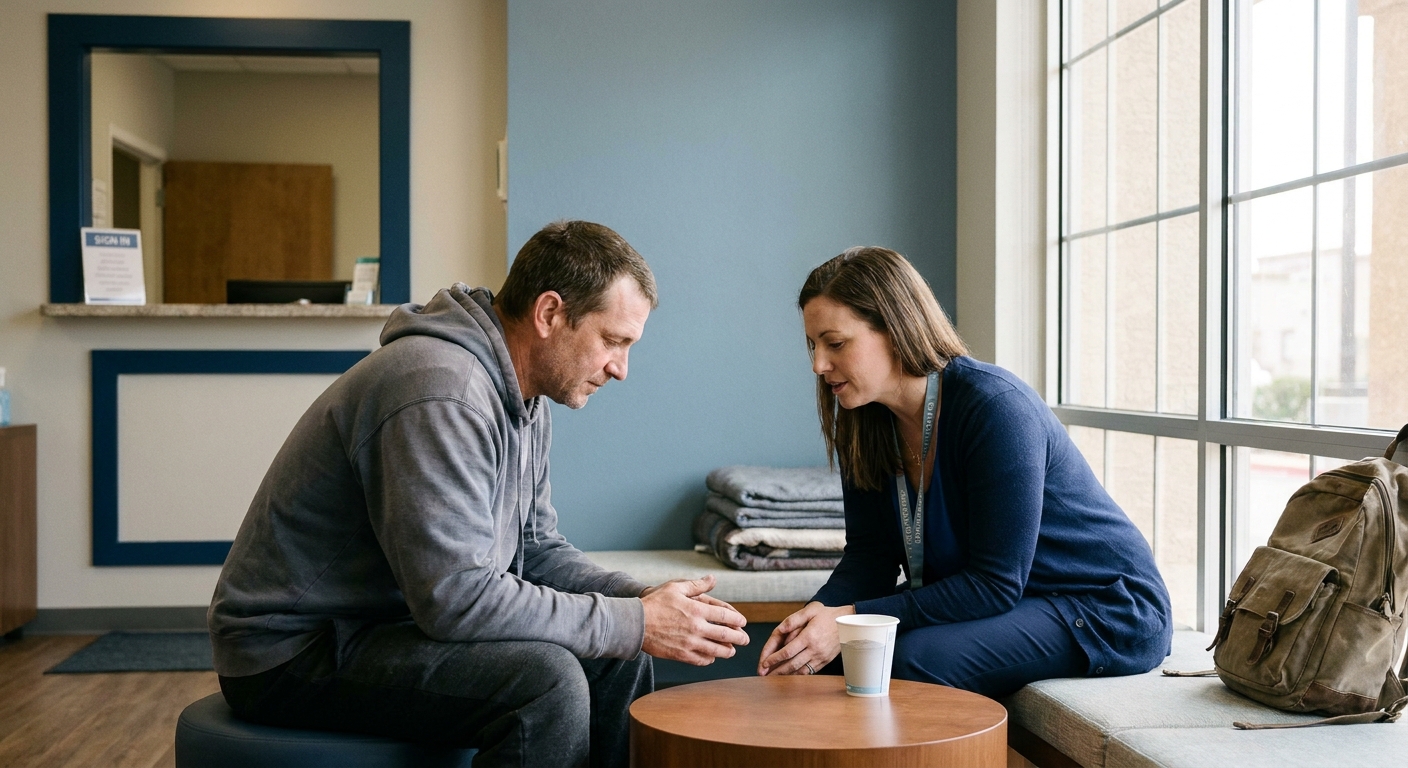
Vegas Stronger is located at 916 N. Main Street in Las Vegas, and we take calls 24 hours a day, 7 days a week. If your loved one is willing, you can bring him in as a walk-in and the process begins that day. If he is not ready to talk to anyone yet, you can still call for him. Our team will explain what the first visit looks like, so you can describe it to him in plain terms when the moment is right. Sometimes knowing he will be fed, that nobody will make him wait two weeks, and that a person in recovery might be the one driving him is what moves “maybe later” to “okay.”
Insurance comes up early for most families, so here is the plain answer. Vegas Stronger accepts Medicaid, BCBS, Aetna, Cigna, and UHC. If your loved one has lost his Medicaid or never enrolled, our case managers help with enrollment during the first visit, so coverage paperwork does not block his first step. Our admissions and prior authorization team can review your plan’s specific benefits with you directly.
The first contact itself is simple: consent and screens at the front desk, food and a clinical assessment with a therapist, a psychiatric evaluation, a peer support plan, and a case manager working on where he sleeps tonight. Because we are a designated Coordinated Entry site, that case manager can also connect him to the wider housing system in Las Vegas.
Questions Families Ask About Homeless Outreach in Las Vegas
What happens if my family member has no ID or insurance?
Vegas Stronger’s case managers help replace a missing ID and enroll the person in Medicaid as part of the same-day intake process. Not having documents does not have to delay the first visit, the clinical assessment, or the start of care at our 916 N. Main Street location in Las Vegas.
Can someone get homeless outreach Las Vegas services if they have been turned away from other programs?
Yes. Vegas Stronger has no three strikes rule and accepts people back through multiple setbacks. Many of our clients arrive after being discharged from multiple facilities, and the bicycle guy’s story captures what that path can look like.
How does transportation work if the person is living on the street?
Vegas Stronger’s transportation team, made up entirely of people in recovery, picks clients up and drives them to and from the program, including back to where they are sleeping each night. All clients are also fed while in IOP, which removes two of the biggest barriers to showing up.
What if the person needs detox before starting outpatient care?
Vegas Stronger does not provide detox on site. Case managers arrange admission at a trusted medical detox partner, our drivers provide transport, and the client signs an ROI so both teams can coordinate. Afterward, our staff picks the person up to begin outpatient care, usually in PHP, so nobody gets lost in the gap.
Is Vegas Stronger accredited to provide homeless outreach services?
Vegas Stronger is Joint Commission Accredited, holds LegitScript certification, carries state co-occurring enhanced licensure, and is a designated Coordinated Entry site for the Las Vegas housing system. Our clinical director and clinical manager are both LCSWs who have each practiced in Las Vegas for about 20 years.
How long do people stay in homeless outreach care in Las Vegas?
Length of stay at Vegas Stronger varies by individual need. The bicycle guy stayed with us through multiple episodes of care over many months, and his story shows how extended engagement supports lasting change. We use an integrated outpatient model that steps people from PHP to IOP to outpatient care instead of a short 28-day program, and length of stay is based on each person’s clinical needs.
If someone you love is living unsheltered in Las Vegas and struggling with substance use or a mental health crisis, call Vegas Stronger at (702) 234-1356, any hour of the day, or bring them as a walk-in to 916 N. Main Street. Same-day access with no waiting list means consent, clinical assessment, psychiatric care and MAT, a peer support plan, and case management for ID, Medicaid, and housing can all begin in that first visit. Before you go, write down whatever you know: his full legal name, date of birth, last shelter or camp, any medications, and any past history. He does not need an ID to start, but those few details help a case manager rebuild his paperwork faster and get him into a bed sooner.
Take the First Step Toward Stability
If you or someone you care about is experiencing homelessness and struggling with substance use or mental health challenges in Las Vegas, you don’t have to navigate this alone. Vegas Stronger connects people with the treatment and support needed to rebuild from the ground up. Reaching out today means opening the door to real change and a path forward.
Outcomes vary significantly from person to person, and no specific result can be promised or guaranteed.